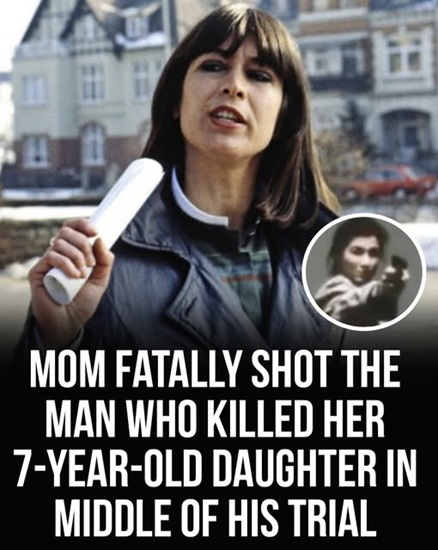
Marianne Bachmeier was born in 1950 in Germany. Her early life was marked by instability and trauma. She later spoke publicly about experiences of abuse and hardship during her youth.
As a teenager, she became pregnant and gave her first child up for adoption. A second child followed under similar circumstances.
In 1973, she gave birth to a daughter, Anna Bachmeier. This time, she raised the child herself. By the late 1970s, Marianne was living in Lübeck, a historic port city in northern Germany, and working in the hospitality industry.
She ran or worked in a pub and was raising Anna as a single mother. Friends and acquaintances later described Anna as a lively, open, and trusting child.
Like many children her age, she attended primary school and spent time with neighborhood friends. For Marianne, Anna represented stability and hope after a turbulent early life.

The Crime That Shattered Everything
On May 5, 1980, Anna disappeared. According to court findings, the seven-year-old had left school early that day after an argument with her mother and was on her way to a friend’s house when she encountered Klaus Grabowski.
Klaus Grabowski was a local butcher with a prior criminal record for sexual offenses against minors. He had previously served time in prison.
During incarceration in the mid-1970s, he had undergone voluntary castration, a measure sometimes used at the time in Germany in cases involving repeat sexual offenders. Later, he received hormone treatment.
Grabowski abducted Anna and took her to his apartment. During the investigation and trial, he admitted to killing the child by strangulation.
She was forced to listen to the defendant’s statements, including claims that appeared to shift blame onto her daughter.
Observers later reported that the suggestion Anna had provoked or attempted to extort her killer deeply angered Marianne. She later said that hearing those allegations in court caused her extreme emotional distress.

Court security at the time was not as stringent as in later decades. On March 6, 1981—the third day of the trial—Marianne entered the courtroom carrying a small handgun, later identified as a Beretta pistol.
Accounts vary slightly in detail, but most reports agree that she fired eight shots at Grabowski, seven of which struck him. He died shortly thereafter from his injuries.
Immediately after the shooting, Marianne was restrained and arrested in the courtroom. According to witnesses, she made statements expressing that she had acted because he had killed her daughter.
The scene was chaotic. Judges, lawyers, and spectators were stunned. The killing of a defendant inside a courtroom was unprecedented in postwar German legal history.
Arrest and Charges
Marianne Bachmeier was taken into custody and charged with murder and illegal possession of a firearm. Her act was widely described as vigilantism—taking justice into one’s own hands rather than allowing the legal process to reach its conclusion.
During her own trial in 1982, Marianne stated that she had acted in an extreme emotional state. At times she described feeling as though she were in a dream-like condition when she fired the weapon.
However, expert witnesses suggested that bringing a loaded firearm into the courtroom and firing accurately required preparation and intent.
The court ultimately convicted her not of murder, but of premeditated manslaughter and unlawful possession of a firearm. In 1983, she was sentenced to six years in prison.
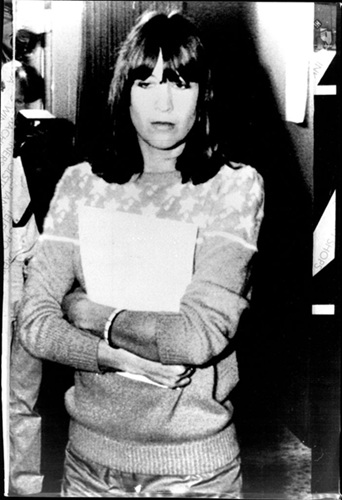
The court considered her emotional distress but also emphasized that the rule of law could not tolerate acts of personal revenge.
She served approximately three years before being released early on parole.
A Nation Divided
The case generated enormous media coverage in West Germany and internationally. Public reaction was sharply divided.
Some viewed Marianne as a grieving mother pushed beyond endurance. Others saw her actions as a dangerous precedent that undermined the legal system.