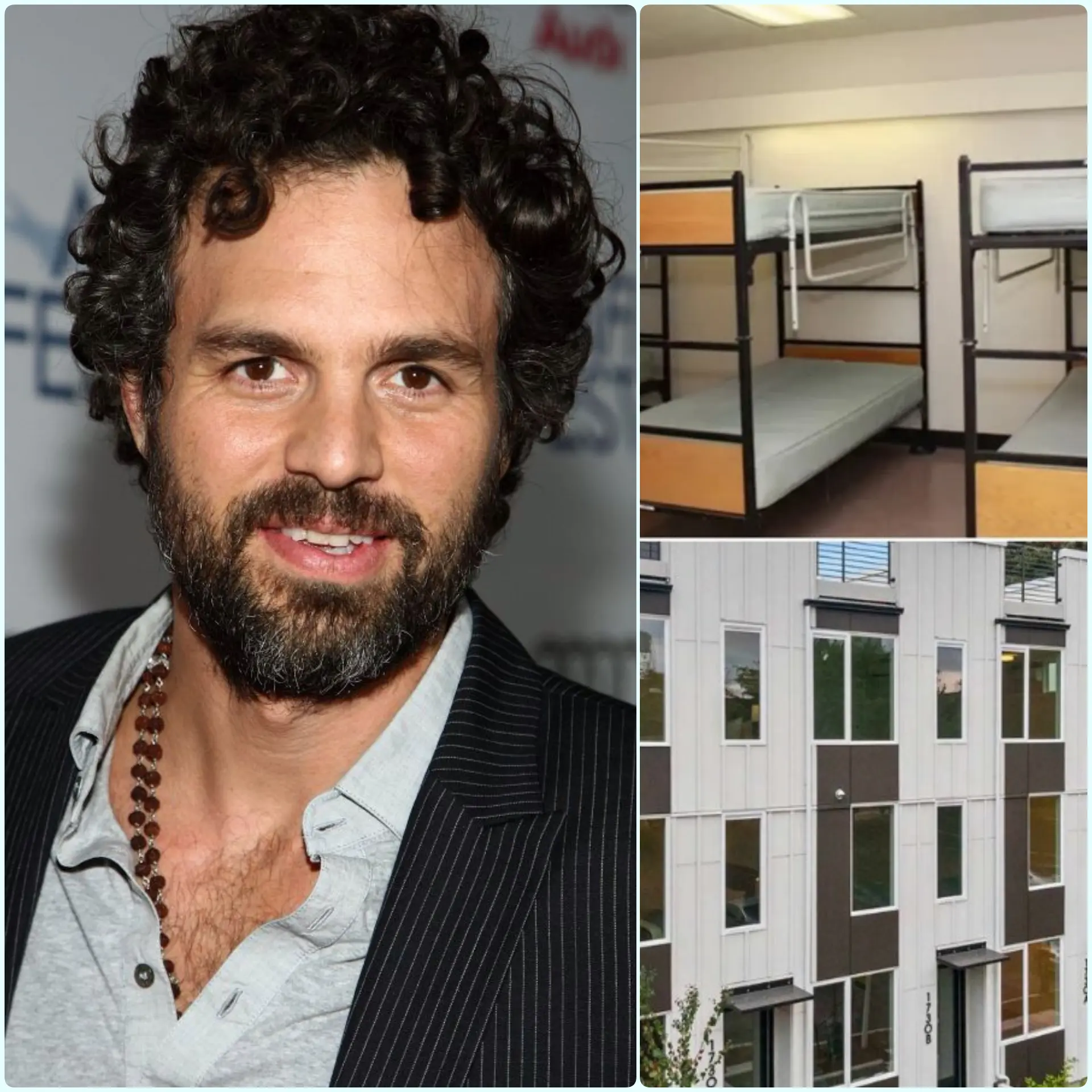
In a sweeping act of philanthropy that has captured national attention, Mark Ruffalo and his wife have announced they are donating their entire $5 million in recent earnings and sponsorship proceeds to fund a transformative network of homeless support centers in Charleston, South Carolina.
The ambitious initiative, which local officials say could redefine how the region addresses homelessness, will create 150 permanent housing units and 300 emergency shelter beds. Beyond providing roofs and walls, the project will integrate mental-health services, job training, addiction recovery resources, and long-term stability programs designed to help individuals transition from crisis to independence.
Standing before a small crowd of community leaders and nonprofit partners, Ruffalo grew emotional as he explained the motivation behind the donation.
“We’ve seen too many people struggling just blocks from where hope and opportunity shine brightest,” he said, his voice unsteady. “No one should be invisible — not in this country, not in this city.”

A City of Beauty and Contradiction
Charleston is widely known for its historic architecture, thriving tourism industry, and coastal charm. But like many American cities experiencing rapid growth, it also faces rising housing costs and increasing economic disparity. Advocates say that behind the picturesque streets and bustling waterfront lies a quieter crisis affecting hundreds of residents.
According to local service providers, affordable housing shortages, untreated mental illness, job instability, and addiction have converged to create mounting pressure on emergency shelters. Many existing facilities operate at or near capacity year-round.
Community organizers describe Ruffalo’s donation as a “game-changing intervention” at a critical moment.
“This is not a short-term bandage,” one nonprofit director said. “This is an investment in long-term stability.”
Beyond Shelter: A Holistic Approach
What sets the initiative apart is its emphasis on comprehensive care. Rather than focusing solely on temporary shelter, the project aims to build a network of integrated support centers. Each facility will combine housing units with on-site counseling, workforce development workshops, and case management services.
Project planners say the 150 permanent housing units will prioritize individuals experiencing chronic homelessness — those who have cycled repeatedly through emergency shelters or have complex health needs. The additional 300 shelter beds will serve as an immediate safety net, ensuring that fewer people are forced to sleep outdoors.
Mental-health professionals will be embedded within the centers, offering therapy sessions and crisis intervention. Job training partnerships with local businesses will create pathways to employment, while financial literacy programs will help residents build sustainable futures.

Ruffalo has long advocated for systemic solutions rather than symbolic gestures. In interviews over the years, he has frequently emphasized the interconnected nature of social challenges, arguing that housing, healthcare, and economic opportunity cannot be addressed in isolation.
Personal Conviction Behind the Gift
Those close to Ruffalo say the decision to donate the full $5 million reflects deeply held personal convictions. While the actor has supported numerous environmental and social justice causes throughout his career, this project marks one of his most direct financial commitments to a single community initiative.
In his remarks, he spoke about walking through neighborhoods where luxury developments stand just blocks from encampments.
“It shouldn’t feel normal to step over someone sleeping on the sidewalk,” he said. “We have the resources. We have the creativity. What we need is the will.”
Observers noted that his words were not framed as charity, but as responsibility.
Community Partnerships
Local officials confirmed that the project will be developed in collaboration with established nonprofits and city planners. Construction is expected to begin later this year, pending final zoning approvals and environmental assessments.
Community partners emphasized that the centers will not operate in isolation. Instead, they will coordinate with healthcare providers, educational institutions, and small businesses to create a network of opportunity.
“This is about restoring dignity,” said one city council member. “Safe housing is foundational. But dignity also comes from meaningful work, community connection, and the chance to rebuild.”
Addressing a National Crisis
Homelessness remains a pressing issue across the United States. Economic volatility, rising rents, healthcare gaps, and lingering effects of the pandemic have compounded longstanding vulnerabilities. National advocacy groups have repeatedly called for scalable, community-based solutions.
Ruffalo’s initiative reflects a growing trend among high-profile figures who are choosing to invest in targeted local projects rather than broad national campaigns. By concentrating resources in one city, supporters argue, the effort has the potential to serve as a model for replication elsewhere.
Experts in housing policy say that combining permanent supportive housing with mental-health and employment services significantly increases the likelihood of long-term stability. Studies consistently show that stable housing reduces emergency room visits, incarceration rates, and overall public costs.

Public Reaction
News of the donation spread rapidly online, generating widespread praise. Social media platforms filled with messages applauding the actor’s commitment and calling the initiative an example of leadership through action.
Some critics questioned whether celebrity-driven philanthropy should fill gaps that many believe government policy ought to address. Supporters countered that immediate relief efforts should not wait for political consensus.
Regardless of perspective, few disputed the scale of the contribution.
“This isn’t symbolic,” one local advocate said. “It’s transformative.”
Long-Term Vision
Organizers estimate that once completed, the network of centers could serve hundreds of individuals annually. Plans include communal spaces designed to foster community engagement, outdoor areas for recreation, and classrooms for skill-building workshops.
Importantly, the project includes funding for ongoing operational costs during the first several years. That financial cushion aims to prevent the centers from facing the sustainability challenges that often hinder nonprofit housing programs.
Ruffalo indicated that while the $5 million donation provides the foundation, he hopes additional private donors and corporate partners will contribute to expand the model.
“This is just the beginning,” he said. “If we prove it works here, why not scale it?”
A Broader Message
At its core, the initiative sends a message about visibility and compassion. By centering the narrative on dignity rather than deficiency, Ruffalo reframed homelessness as a solvable challenge rather than an inevitable condition.
Community leaders noted that language matters. When people experiencing homelessness are treated as neighbors rather than statistics, public will for change often strengthens.
Ruffalo’s tearful appeal underscored that perspective. His emphasis on invisibility — and the refusal to accept it — resonated deeply with those in attendance.
Construction and Timeline
Preliminary design plans are already underway. Architects are working to create spaces that feel welcoming and humane rather than institutional. Groundbreaking is anticipated later this year, with phased openings projected over the following 18 to 24 months.
Local contractors will be prioritized, creating jobs during the construction phase and fostering community buy-in.
A Lasting Impact
Whether measured in beds, apartments, or individual success stories, the impact of the initiative could ripple far beyond Charleston. Housing advocates across the country are watching closely.
For Ruffalo, however, the goal appears less about recognition and more about responsibility.
“No one should be invisible,” he repeated at the close of his remarks. “If we can change that for even one person, it’s worth everything.”
In a nation grappling with complex social challenges, this $5 million investment stands as a tangible expression of belief — belief that stability is possible, that dignity is non-negotiable, and that meaningful change begins with action.
As construction preparations begin and partnerships solidify, Charleston may soon witness a new chapter in its story — one defined not only by historic charm, but by renewed commitment to those who have too often been left unseen.