Keith Thompson

“Older, Wiser, or Just Smarter? This Picture Has Everyone Talking”


🤔 LOOK CLOSELY… WHO IS THE SMARTEST PERSON HERE?

At first glance, this image looks simple. Three people. Three situations. Three choices.

But don’t rush. Your first instinct matters more than you think.

Psychologists say that the way we judge intelligence in others often reflects how our own mind works. Logic, empathy, intuition, risk-taking — they all show up in subtle ways.

So… which number did you pick? 👀

Read below to see what your choice might say about you 👇


🔹 If you picked 

1

You are a lucky thinker with strong intuition.

You tend to trust your gut, and surprisingly, it works out for you more often than not. You might not always have a detailed plan, but you have a natural sense of timing and opportunity. People often say you’re “in the right place at the right time.”

You’re optimistic, adaptable, and mentally flexible. Even when things look risky, you believe there’s a way out — and that confidence attracts good outcomes. You don’t overthink every detail, which helps you move forward while others hesitate. 🍀

🔹 If you picked 

2

You are practical, logical, and solution-oriented.

You focus on cause and effect, not excuses. When there’s a problem, your brain immediately looks for how to fix it. You’re the person others rely on in stressful situations because you stay calm and think clearly.

You value effort, responsibility, and smart planning. Luck doesn’t impress you — preparation does. You may seem quiet or serious at times, but your intelligence shows in your actions, not your words. 🧠

🔹 If you picked 

3

You are emotionally intelligent and socially smart.

You understand people deeply — their motives, feelings, and weaknesses. You don’t just look at the situation; you look at who is involved. This makes you great at communication, negotiation, and leadership.

You know that intelligence isn’t only about logic — it’s about awareness. You often think ahead, anticipate reactions, and choose paths that benefit everyone (including yourself). 🌊


Hidden Messages in the Lines of the Hand That Reflect Life’s Path

The practice of palmistry, centered on interpreting the lines and shapes of the human hand, can be traced back thousands of years to ancient civilizations such as India, China, Egypt, and Greece. Across these cultures, scholars and spiritual teachers viewed the hand as a living record of a person’s journey.

They believed that every line, curve, and marking reflected experiences, abilities, challenges, and possibilities that unfolded over time. This knowledge was preserved through oral tradition, manuscripts, and apprenticeships, gradually adapting to the beliefs of each region.In several Asian traditions, the line associated with fortune and opportunity holds deep significance, while many European interpretations place greater emphasis on emotional pathways and life direction when reading the palm.

Even today, fascination with the hand as a symbolic guide to destiny remains widespread. People from many backgrounds continue to seek palm readings, motivated by curiosity, reflection, and the hope of gaining insight into their personal paths.

The experience feels intimate because the hand is unique to each individual. Unlike generalized predictions, palmistry focuses on something deeply personal, which can make the reading feel meaningful and tailored to one’s own life story.

Despite its long history, palmistry has often faced criticism from the scientific community. Researchers classify it as a pseudoscience, noting that the lines of the hand form through genetic factors, prenatal development, and natural skin movement. From this perspective, these markings do not provide measurable information about personality traits, financial outcomes, or future events. Studies have not demonstrated reliable connections between palm features and life results. Many skeptics believe the effectiveness of palm readings lies in suggestion, interpretation, and the human tendency to find patterns that align with personal expectations.

Even so, palmistry continues to hold cultural and emotional value for many people. Rather than viewing it as a strict predictor of fate, some approach it as a reflective practice. In this context, palm readings encourage introspection, prompting individuals to think about their ambitions, fears, and priorities. The process of reflection itself can offer clarity and motivation, especially during periods of uncertainty or transition.

Belief in palmistry remains a personal choice. For some, it represents a symbolic language that offers reassurance and a sense of direction. For others, it serves as a cultural tradition or an engaging form of storytelling. Regardless of belief, the continued interest in palmistry highlights a shared human desire to understand life’s path and to feel connected to something larger than daily routine.

Within palmistry, particular attention is often given to markings associated with financial well-being. Certain traditions suggest that numerous intersecting lines near the base of the palm indicate ongoing financial challenges or obstacles related to stability. These markings are interpreted as signs of difficulties that require persistence, discipline, and careful decision-making to overcome. In these interpretations, hardship is not portrayed as permanent, but as a condition that demands awareness and effort.

Other hand patterns are associated with prosperity and professional growth. A clearly defined cross near lines linked to destiny or life direction is often viewed as a favorable sign. According to traditional beliefs, such markings symbolize opportunities, strong judgment, and the ability to attract success through effort and timing. A deep and well-formed line connected to fortune is commonly associated with steady material comfort and long-term security.

Whether viewed symbolically or skeptically, these interpretations invite thoughtful consideration. The lines on the palm encourage people to reflect on their choices, habits, and goals. Financial success, personal fulfillment, and resilience are shaped through dedication, adaptability, and circumstance rather than markings alone. The enduring appeal of palmistry may rest in its ability to spark self-examination and intention.In the end, the hand can be seen as a reminder rather than a verdict. It reflects a life in motion, influenced by action, learning, and growth. Palmistry, at its core, continues to endure because it speaks to a timeless desire: to understand oneself more deeply and to approach the future with awareness, purpose, and hope.

PRESIDENT TRUMP’S FBI ANNOUNCES MAJOR ARREST

A serious incident unfolded at a U.S. Border Patrol checkpoint on August 1, 2023, involving a man from Katy, Texas, who was attempting to evade law enforcement. The man, identified as 26-year-old Kevin Dominguez, approached the checkpoint on U.S. Highway 57, where officers were conducting routine inspections. His behavior and the circumstances of his approach quickly escalated what should have been a standard stop into a dangerous encounter.

THIS ISN’T WHAT YOU THINK… BUT IT’S WHY YOUR SKIN KEEPS BREAKING OUT

We all have tiny openings in our skin that work nonstop, releasing oil and sweat to keep everything balanced. But sometimes, those openings start acting up. They trap things they shouldn’t. They swell. They get irritated. And before you know it, your skin starts reacting in ways you can’t ignore.

What makes it worse is that most people don’t realize how easily pores can become clogged. It’s not just dirt. It’s not just makeup. It’s not even just hormones. It’s a slow buildup of everyday habits that feel harmless but quietly turn your skin against you. The kind of buildup you don’t notice until it’s already too late.

Some areas of the body are more sensitive than others. Warmer. More humid. More prone to friction. That’s where pores struggle the most, trapping oil and bacteria deep under the surface. When that pressure builds, your skin sends signals — redness, bumps, inflammation — all trying to tell you something’s wrong.

What’s shocking is how common this is. Dermatologists say many people unknowingly do the same few things every single day that make pores tighter, dirtier, and harder to clear. And once a pore is blocked, it doesn’t just “open” again on its own.

The real problem? Most skincare routines actually make it worse. Scrubbing too hard. Using the wrong products. Over-washing. Under-washing. Each mistake pushes buildup deeper instead of removing it.

Once you understand what’s really happening under the skin, everything changes. The solution isn’t aggressive. It’s not expensive. It’s about stopping the habits that silently choke your pores and learning what actually lets them breathe again.

Watch closely… because what you’re about to see explains why your skin keeps reacting, why breakouts return in the same spots, and why once pores reach a certain point, they start to…

You go to bed exhausted, ready to enjoy a long, restful sleep… and yet, at exactly 2 a.m., your eyes open as if an invisible alarm clock has gone off. Frustrating, isn’t it? We often think, “It’s because I drank before bed!”, but behind these nighttime awakenings lies a set of everyday mechanisms, often overlooked. And the good news is: understanding what’s going on can already help improve your sleep.

During the night, it is easy to imagine the body switching off, entering a kind of standby mode until morning arrives. In reality, sleep is an active and carefully orchestrated process. While the mind drifts away, the body continues to regulate, rebalance, and repair itself. One of the most surprising aspects of this nighttime activity involves the way fluids move and redistribute once we lie down.

Throughout the day, gravity pulls fluids downward, causing them to accumulate in the legs and lower body. When you finally lie flat, this distribution changes. Fluids begin to circulate more evenly, returning toward the upper body. This shift forces the body to adapt and manage these internal movements, which can sometimes create mild sensations of pressure or an unexpected need to use the restroom. Although it may feel disruptive, this response is entirely natural.

Body temperature is another critical factor influencing sleep quality. As night approaches, core temperature needs to drop slightly to allow deeper sleep. If this process is interrupted, sleep becomes lighter and more fragmented. Something as minor as heavy pajamas, an overly warm duvet, or a stuffy room can prevent proper temperature regulation and trigger frequent micro-awakenings.

Stress also plays a hidden but powerful role during the night. Many people are familiar with waking suddenly around two in the morning, alert and restless. At this hour, the nervous system is particularly sensitive, allowing emotions and thoughts suppressed during the day to resurface. This is not a malfunction but part of the brain’s natural effort to process and organize emotional information.

When mental load becomes excessive, however, this nighttime processing can turn disruptive. Unfinished tasks, lingering worries, or unresolved conversations may keep the mind active even when the body longs for rest. You may not consciously feel stressed, yet your thoughts continue to analyze, preventing sustained sleep.

Fortunately, improving sleep does not require drastic changes. Simple habits can make a meaningful difference. Staying hydrated during the day, reducing fluids in the evening, briefly elevating the legs before bed, choosing breathable bedding, calming the mind with gentle routines, and taking one last quiet trip to the bathroom can all help support uninterrupted rest through the night.

Our tips to prevent your cat from destroying the Christmas tree!

For cat owners, the arrival of a Christmas tree often brings equal parts excitement and dread. While the tree symbolizes warmth, celebration, and tradition, cats tend to see it as a mysterious new structure placed conveniently indoors for climbing, chewing, and batting. The good news is that most holiday disasters involving cats and Christmas trees are preventable with foresight, patience, and an understanding of feline behavior. Creating a festive space that works for both humans and pets starts long before the first ornament is hung.

One of the most overlooked steps is timing. Introducing the tree gradually can make a dramatic difference in how your cat reacts to it. Instead of decorating immediately, place the tree in its final location several days in advance. Leave it undecorated and unlit, allowing your cat to investigate it at its own pace. Cats are highly sensitive to changes in their environment, and sudden transformations can trigger anxiety or overstimulation. By giving your cat time to sniff, circle, and observe the tree, you reduce its novelty and excitement. Once the tree becomes part of the background, it is far less likely to be treated as a playground when decorations appear.During this adjustment period, observation matters. If your cat attempts to climb the branches or chew on the needles, calmly intervene. Gently lift the cat away or redirect its attention without yelling or startling it. Negative reactions often escalate the behavior by turning the tree into a source of tension or challenge. Calm consistency teaches boundaries more effectively than punishment. Many animal behavior specialists emphasize that positive reinforcement—petting, soothing tones, or offering an approved alternative—helps cats understand where they are allowed to be without creating fear.Placement of the tree is another critical factor. Cats are natural climbers and jumpers, and they instinctively explore vertical spaces. A poorly positioned tree can quickly become an irresistible launchpad. Avoid placing the tree near furniture, shelves, or windowsills that could give your cat extra height or momentum. Instead, choose an open area with enough space around the tree to limit jumping access. The more isolated and grounded the tree is, the less appealing it becomes as a climbing challenge.

Stability is just as important as location. A lightweight stand is often no match for a determined cat. Investing in a heavy, well-balanced base dramatically reduces the risk of tipping. Large pots, weighted stands, or containers filled with soil or sand can provide extra support. Some pet owners also discreetly anchor the tree using clear fishing line attached to wall hooks or ceiling points, adding stability without affecting appearance. A tree that does not wobble when touched is far less interesting to a cat and significantly safer for everyone.

Decoration choices play a major role in preventing accidents. Cats are instinctively drawn to objects that move, shimmer, or dangle. Ornaments placed on lower branches are almost guaranteed to be swatted. To minimize temptation, reserve the bottom portion of the tree for sturdy, non-breakable decorations or leave it undecorated altogether. Fragile glass ornaments should be placed higher up, well out of reach. This not only protects your decorations but also prevents injuries caused by broken glass.

Garlands and tinsel deserve special caution. Long, string-like decorations can be particularly dangerous if swallowed, potentially causing serious internal injuries. If your cat has a history of chewing or playing with string, it is best to avoid these decorations entirely. Opt instead for ribbon-free ornaments, fabric accents, or decorations that are securely attached to branches.

Lighting introduces another layer of concern. Electrical cords are tempting targets for curious cats, especially kittens. Exposed wires can lead to chewing, which poses a serious risk of electric shock. To reduce danger, secure cords tightly along walls or behind furniture where they are inaccessible. Cord covers can offer additional protection. Battery-operated lights are an excellent alternative, eliminating the risk of electrical injury altogether while still providing a festive glow.

Tree needles themselves can also pose problems. Whether real or artificial, needles can irritate a cat’s mouth or digestive system if chewed. Regularly vacuuming fallen needles helps reduce temptation and keeps the area clean. For real trees, ensure the water reservoir does not contain chemical additives, as these can be toxic to pets if ingested.

Accidents can still happen, even with careful planning. Broken ornaments, especially glass ones, are a hidden hazard. When glass shatters, tiny fragments can scatter across the floor, embedding themselves in carpet fibers or hiding in corners. These pieces can easily cut paws or be swallowed. If something breaks, immediately remove your cat from the area, then sweep and vacuum thoroughly. Taking extra time to clean reduces the risk of injury long after the initial accident.

Beyond physical adjustments, providing distractions can significantly reduce your cat’s interest in the tree. Make sure your cat has access to climbing structures, scratching posts, and interactive toys elsewhere in the home. A cat with plenty of outlets for its energy is less likely to fixate on the tree. Placing a favorite bed or perch in another part of the room can redirect attention away from the decorations.

Scent deterrents can also help. Cats are sensitive to certain smells, such as citrus. Lightly placing citrus peels near the base of the tree or using pet-safe deterrent sprays can make the area less appealing without causing harm. These methods should be used sparingly and tested to ensure they do not stress your cat.

Ultimately, success comes from preparation and empathy. Cats are not trying to ruin the holidays; they are responding naturally to a dramatic change in their environment. A tall, scented object filled with lights and dangling items is fascinating from a feline perspective. By anticipating these instincts and adjusting accordingly, you create a space where both celebration and safety coexist.

The holidays should be joyful, not stressful. With thoughtful placement, secure decorations, and a calm introduction, your Christmas tree can remain upright, intact, and beautiful throughout the season. More importantly, your cat can enjoy the festivities without risk or reprimand. When patience meets planning, it becomes entirely possible to celebrate in a home that feels magical for humans and comfortable for four-legged family members alike.


“No One Was Supposed to See This…” — Justin Bieber’s Shirtless Moment on Stage Sends the Internet Wild

A Split Second That Changed the Entire Night

In the age of instant sharing and nonstop digital attention, it often takes only a brief, unexpected moment to ignite a global reaction. During a recent live performance,

Justin Bieber once again proved that even after years in the spotlight, he still has the power to dominate online conversations. What began as a high energy concert filled with music, lights, and familiar hits suddenly turned into a viral phenomenon when an unplanned

shirtless moment on stage caught both the audience and the internet completely off guard.

The moment itself was not part of any choreographed routine. There were no dramatic build ups or planned reveals. Instead, it happened naturally, almost accidentally, making it feel raw and authentic. Fans present at the venue reacted instantly, while those watching through recorded clips experienced the surprise seconds later. Within hours, social media platforms were flooded with reactions, discussions, and endless replays of what many called one of Justin Bieber’s most talked about live moments in recent years.

Why the World Still Watches Justin Bieber

To understand why this moment resonated so deeply, it is important to recognize the unique position Justin Bieber holds in modern pop culture. From his early days as a teenage sensation discovered online to his evolution into a global music icon, Bieber has spent most of his life under public scrutiny. Every appearance, performance, and expression is analyzed by millions across the world.

Despite stepping back from constant touring and maintaining a lower public profile in recent times, Justin Bieber’s influence remains powerful. His fans have grown with him, while new listeners continue to discover his music. This balance between nostalgia and relevance allows even a spontaneous moment to generate massive attention. When Justin Bieber appears on stage, audiences do not simply watch a performance. They witness a figure whose journey has been deeply intertwined with internet culture itself.

The Moment No One Expected

During the performance, everything appeared normal. The crowd sang along, lights pulsed to the rhythm, and the atmosphere reflected the familiar excitement that defines a Justin Bieber concert. Then, in a brief pause between songs, an unexpected moment occurred. Whether it was due to heat, movement, or simple spontaneity, Bieber found himself performing without his shirt for a short time.What made this moment powerful was not shock value, but authenticity. There was no dramatic gesture or attempt to draw attention. It felt unplanned and natural, which only intensified the reaction. Fans quickly realized they were witnessing something unscripted, and in today’s curated digital world, authenticity is rare and highly valued.

Phones immediately rose into the air. Short clips were recorded, shared, and reposted within minutes. The phrase Justin Bieber shirtless on stage began trending across platforms as fans and media outlets attempted to capture the significance of what they had just seen.

Social Media Reacts in Real Time

The internet thrives on moments that feel genuine, and this was exactly that. Within hours, millions of users were discussing the incident. Some praised Justin Bieber’s confidence, while others focused on the spontaneity of the moment. Many comments highlighted how refreshing it felt to see a global star act without overthinking the audience reaction.

What stood out most was the diversity of responses. Longtime fans saw it as another reminder of Bieber’s growth and comfort in his own skin. Casual listeners viewed it as a viral highlight that reminded them why he remains relevant. Media outlets framed it as a symbol of how even a brief, unscripted action can dominate digital conversations in a matter of minutes.

The phrase No one was supposed to see this quickly became associated with the moment, emphasizing how accidental events often create the strongest emotional connections.

A Reflection of Bieber’s Evolution

This moment cannot be separated from Justin Bieber’s personal evolution. Over the years, he has spoken openly about pressure, expectations, and the challenges of growing up in the public eye. His recent appearances have shown a calmer, more grounded individual who seems less concerned with controlling every aspect of his image.

The shirtless moment on stage symbolized this shift. It was not about presentation or perfection. It was about being present in the moment. Fans interpreted it as a sign that Bieber is more comfortable embracing imperfection and authenticity.

In contrast to carefully staged promotional content, this incident felt real. There was no official announcement, no teaser, and no attempt to capitalize on it beforehand. The internet did what it does best, turning a fleeting moment into a shared global experience.

The speed at which the clip spread also reflects how interconnected modern audiences have become. A single recording from the crowd can reach millions within minutes, reshaping public narratives almost instantly.

Media Coverage and Public Interpretation

Entertainment media quickly picked up the story, framing it as one of the most memorable concert moments of the year. Headlines emphasized the surprise factor and the overwhelming online response. Articles analyzed fan reactions, body language, and even the symbolism behind the moment.

What is notable is that the coverage remained largely positive. Rather than controversy, the focus was on Justin Bieber’s stage presence and the cultural impact of authenticity. Commentators highlighted how moments like these humanize celebrities and strengthen the connection between artists and fans.

The Power of Live Performances

Live performances hold a unique power that recorded content cannot replicate. They allow space for unpredictability, emotion, and connection. Justin Bieber’s concert moment reinforced why live shows continue to matter in a digital age dominated by streaming.

Fans who attended the show described the energy shift in the room. The crowd’s reaction was immediate and emotional, creating a shared memory that extended beyond the venue. Those watching online felt included through shared clips and discussions, proving that live moments can unite audiences across distances.

This incident demonstrated that even in an era of high production value and precise choreography, the most memorable moments often come from spontaneity.

A Reminder of Bieber’s Cultural Influence

Years into his career, Justin Bieber remains a cultural force. His ability to trend globally within hours speaks volumes about his lasting influence. While many artists fade as trends change, Bieber continues to adapt, connect, and remain relevant.

The shirtless moment was not significant because of shock or controversy. It was significant because it showed that audiences still care deeply about what he does. Every small action is magnified because of the emotional investment fans have built over time

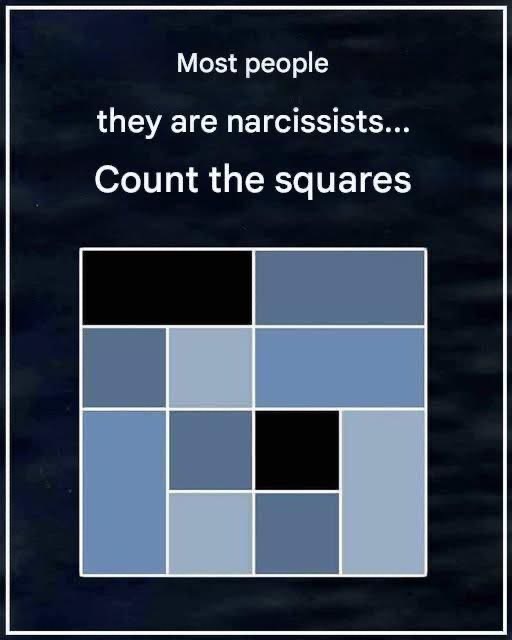
What This Square-Counting Puzzle Reveals About Confidence and Perception

At first glance, this puzzle seems simple. Count the number of squares and move on. Yet this deceptively easy challenge can reveal far more than most people expect. It quietly highlights how we think, how confident we feel in our judgments, and how willing we are to question ourselves. What looks like a harmless visual test can tap into familiar psychological forces such as cognitive bias, overconfidence, and even tendencies sometimes linked to narcissism.The moment people see the image, the brain often rushes toward a quick solution. Many people announce an answer with strong certainty almost immediately. That reaction can feel satisfying because it creates a sense of speed and sharpness. Yet the same rush often becomes the reason the puzzle is missed. The mind tends to prefer fast closure over careful verification, and this type of visual challenge makes that tendency easy to spot.

Overconfidence often shows up as a strong belief that an initial impression must be accurate. People who heavily trust their first reaction may avoid reviewing the image from different angles or considering alternative possibilities. In this mindset, confidence replaces caution, and the puzzle becomes less about counting and more about protecting the comfort of being “right.”

In contrast, people who slow down, recount, and entertain the possibility of error often display humility and open-mindedness. The willingness to challenge one’s own conclusion can signal emotional maturity and self-awareness. It draws a clear line between healthy confidence and rigid certainty, which is sometimes associated with narcissistic patterns of thinking.

The difficulty of this puzzle often comes from how the brain naturally organizes visual information. The mind quickly locks onto the smallest and most obvious shapes, then assumes the job is finished. Larger or overlapping shapes can remain invisible unless you intentionally shift your attention.

To reach the correct total, you have to examine the image on multiple levels.

Small squares are the easiest to detect. They form the foundation of the grid and are usually counted first.

Medium-sized squares appear when smaller units combine. They are less obvious because they do not stand alone, and they often require careful scanning to find.

Large squares become visible when you step back and consider the full structure. Many people miss these because their focus stays fixed on the smallest parts.

When someone answers quickly, they often skip one of these layers. This mistake is especially common when a person feels certain that the first count must be accurate. People who resist rechecking themselves are more likely to overlook hidden structures.

What Your Answer May Suggest About You

If you counted fewer than six squares, you likely made a fast assumption without fully analyzing the image. This pattern can reflect impulsiveness and strong faith in immediate judgment.

If your total fell between six and nine squares, you probably noticed more details but still missed some important elements. This suggests a blend of confidence with occasional oversight.

If you identified between ten and thirteen squares, you likely took time to explore every possibility. That approach shows patience, curiosity, and a willingness to reconsider your own thinking, traits commonly tied to humility and self-reflection.

A Lesson Beyond the Puzzle

This exercise is not really about geometry. It is about awareness. It shows how easily the mind can accept incomplete information when certainty feels strong. It also demonstrates how useful constructive self-questioning can be. Rechecking your work does not weaken you. It strengthens your judgment.

The real challenge is not the number you end up with. It is how you reach it.

Do you pause and verify, or do you settle quickly because the first answer feels good?

Before you finalize your count, look again. Scan slowly. Allow yourself to be surprised by what you may have missed the first time. The puzzle may seem simple, but the thinking habits it reveals can be meaningful in everyday life, where quick certainty often feels comfortable, and careful accuracy often requires intention.

🕰️ Only the Old-School Will Remember This!

I’m almost certain that most people scrolling past this won’t know what this is. Times have changed so fast that many of the everyday tools we once used have completely disappeared, replaced by modern technology and convenience. But for those who recognize this instantly, this picture probably brings back a flood of memories from a much simpler time.

This wasn’t just an object — it was part of daily life. It reminds us of childhood, family homes, small routines, and a slower pace where patience mattered and things were built to last. Back then, you didn’t replace things easily; you fixed them, cleaned them, and took care of them. Every home seemed to have one, and everyone knew exactly how to use it without instructions or videos.

If you know what this is, you likely remember a time before smartphones, before everything was disposable, and before convenience came at the cost of craftsmanship. You remember learning by watching, doing, and listening to stories from people who came before you.

Here’s How To Spot It – This Penny In Circulation is Worth $85,000

Do you know how to spot this penny? Coins are one of those things that are hiding everywhere, and sometimes they can be worth much more than their actualcoin value. And most recently, news sources have been reporting that this coin is worth a pretty penny!

According to Coin Trackers, the New York Post, KHOU, and Daily Mail UK, a mint condition 1943 copper wheat penny could earn you more than $85,000! According to KHOU (who consulted with Royal Coin and Jewelry

At some point during that year, however, a few copper blanks made it into the minting process— and it is these “mistake” coins that are now being sold for amounts somewhere in the 5 and 6 figures. As mentioned, these 1943 copper wheat pennies must be in mint condition to net values in the $85,000 range. But even in lesser conditions, they have still been selling at an average price of $60,000 (according to Coin Tracker). Saul Teichman, an expert in U.S. Mint errors explains (via Coin Week) that collectors drive up the value of the coin, explaining:

“1943 copper cents have a special cachet with collectors. As for market value, the 1943 cents sell for much more than other errors struck around the same time. ” “Many other World War II errors are rarer than 1943 copper or 1944 steel cents but bring a fraction of a price as they lack that special cachet.” Read more below