Keith Thompson

What Do You See: A Fish or a Plane? The Left-Brain vs. Right-Brain Debate

Ambiguous images are designed to give the brain more than one valid way to interpret what it sees. In this case, the image can appear either as a fish or anairplane, depending on how your visual system organizes shapes, edges, and outlines. Neither interpretation is more correct than the other—they simply reflect different ways the brain can process the same visual information.

If you see a fish first, your brain may be focusing on smaller, enclosed shapes and finer details. This often happens when the visual system prioritizes local features, such as curves or compact forms. It doesn’t mean you are more analytical or detail-obsessed—it only shows which visual cues captured your attention first in that moment.If you see a plane first, your brain may be grouping larger contours into a single, unified structure. This reflects a tendency to process global patterns rather than isolated details. Again, this does not indicate creativity, intelligence, or personality traits—it is simply a difference in visual organization.

Many people associate these differences with the idea of being “left-brained” or “right-brained.” According to popular belief, left-brained individuals are logical and analytical, while right-brained individuals are creative and intuitive. While this idea is widespread, modern neuroscience shows that it is an oversimplification.

In reality, both hemispheres of the brain work together on almost every task, including visual perception, problem-solving, music, and language. There is no strong evidence that people consistently rely on one side more than the other in everyday thinking.

When viewing an ambiguous image, multiple brain regions collaborate. The visual cortex processes basic elements like lines, contrast, and edges. The parietal and frontal areas help organize those elements and compare them to familiar shapes stored in memory. Your brain is constantly testing possibilities and choosing the most plausible interpretation.

This is why your perception can change if you stare at the image longer. As new patterns emerge, the brain updates its interpretation, allowing the alternate image to “snap” into view. The shift can feel sudden, but it is the result of continuous background processing.

Ambiguous images are fascinating not because they reveal hidden personality traits, but because they demonstrate how flexible perception really is. They offer insight into how the brain constructs meaning from incomplete information.


Here’s how to do a pedicure at home with baking soda

Foot care is an essential part of overall well-being, regardless of age. While professional pedicures, specialized creams, and spa treatments can help maintain soft, healthy feet, they are often expensive and not always accessible. As a result, many people turn to simple, homemade solutions to address common foot concerns such as dryness, cracking, and hardened skin in an affordable and effective way.

One of the most common causes of foot skin problems is dehydration. When the skin lacks sufficient moisture, it becomes dry and thick as a protective response. Over time, this dryness can progress into cracked heels, which may become painful, itchy, and uncomfortable if left untreated. Early hydration is key to preventing deeper fissures and ongoing discomfort.

Nutritional deficiencies can also contribute to poor foot skin health. Low levels of essential vitamins and minerals, including iron, may lead to dryness and sensitivity. In addition, medical conditions such as diabetes and hypothyroidism are often associated with changes in skin texture, making the feet more vulnerable to cracking and irritation.

Environmental factors play a significant role as well. Walking barefoot, wearing ill-fitting or rigid shoes, and using harsh soaps can strip the skin of natural oils. Prolonged standing places repeated pressure on the heels, encouraging the skin to harden and eventually split under stress.

Aging naturally affects the skin’s elasticity and ability to retain moisture. As the years pass, skin becomes thicker, drier, and less flexible, increasing the likelihood of cracks. Obesity can intensify this issue, as excess weight places additional pressure on already vulnerable heels.

Early symptoms usually include rough, dry, and sensitive skin around the heel area. As the condition worsens, visible cracks appear, varying in depth and color, leaving the skin exposed to infection and highlighting the importance of timely care.

Michael J. Fox’s Children Share a Meaningful Family Update That Highlights Strength and Gratitude

The truth landed softly, but it cut deep. Michael J. Fox’s four children have finally spoken, and what they revealed isn’t scandal, but something far more disarming. No tabloids. No shock. Just a family quietly telling the world how they’re holding on, changing, and learning to live with time, illness, and love all tangled toge… Continues…


What emerges from their reflections is not a story of a fallen hero, but of a family that decided early on to live without pretending. Michael J. Fox and Tracy Pollan never tried to hide Parkinson’s from their children; instead, they folded it into everyday life—into jokes at the dinner table, into honest conversations, into the understanding that hardship is real but not all-powerful. Their children’s recent words carry the weight of years spent watching a beloved father grow more fragile and yet somehow more present.They describe a home where differences are celebrated and where vulnerability is not a weakness, but a shared language. Each child has carved a unique path, yet they circle back to one another, grounded by the same core lessons: gratitude over bitterness, curiosity over fear, love over denial. Their update is less an announcement and more a quiet promise—to keep showing up for each other, to keep telling the truth, and to keep finding joy, even as the future remains uncertain. In that ongoing choice, their family’s deepest strength is revealed.

House GOP Lawmaker Calls On Trumп Admin to Remove Omar From U.S.

Rep. Randy Fine just crossed a line most politicians won’t even approach. On live television, he backed Donald Trump’s explosive demand to expel Rep. Ilhan Omar not just from Congress, but from the United States itself. Fraud probes, immigration accusations, and a billion‑dollar scandal now collide in a single, polarizing figure. Careers, communities, and campaign narratives are about to deto… Continues…


Randy Fine’s threat to seek Ilhan Omar’s expulsion from the United States marks a dramatic escalation in the GOP’s war over immigration, welfare, and national identity. Tying her fate to allegations of massive fraud in Minnesota’s aid programs, he casts Omar not as an isolated controversy, but as a symbol of what he calls systemic failure in Democratic-led states and in federal immigration enforcement. His push to end all welfare for noncitizens, legal and illegal alike, is designed to turn outrage into hard policy, forcing a national fight over who deserves taxpayer support.At the same time, Trumп renewed claims that Omar married her brother for immigration purposes, and Tom Homan’s confirmation that DHS is pulling records to investigate possible visa fraud, raise the stakes far beyond rhetoric. Omar’s story—Somali refugee turned congresswoman—once embodied the promise of American asylum. Now it is being weaponized as Exhibit A in a broader crackdown, with both her legal status and political future hanging in the balance as investigations unfold and voters decide whose version of America they want to defend.

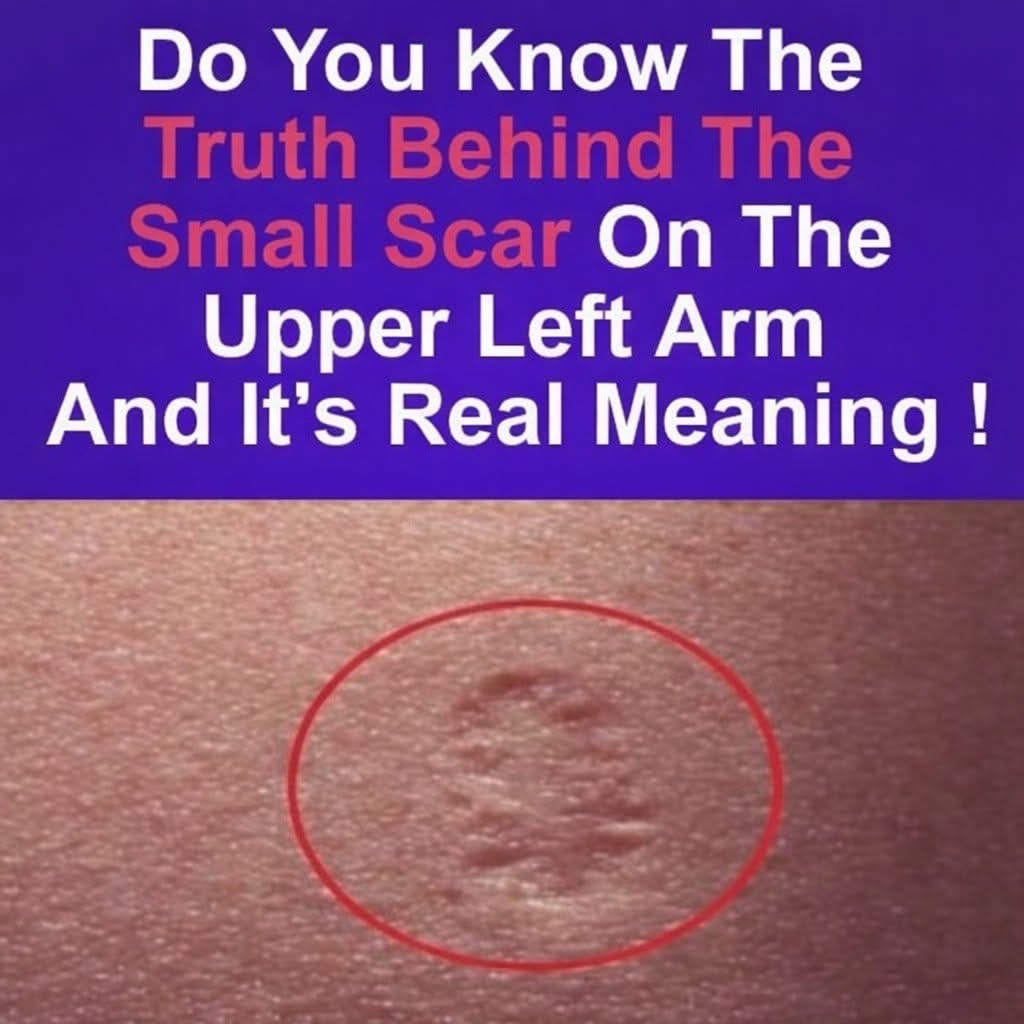
I Found the Smallpox Vaccine Scar What It Means and Why It Matters

Some scars don’t just mark the skin. They mark history.
For years, a strange round dent on the upper arms of parents and grandparents went unquestioned, half-remembered, quietly unsettling. It looked harmless. It wasn’t. That tiny crater was born from a disease that once erased entire families, emptied villages, and terrified the world. It was proof of survival, and a silent warni… Continues…


Long before it became a half-forgotten mystery on an aging arm, that circular scar began as a deliberate wound made in desperation and hope. The smallpox vaccine was delivered with repeated punctures, forcing the body to confront a weakened enemy so it might survive the real one. The blister, the scab, and the permanent mark that followed were all signs that the immune system had learned its lesson well.Those who bear that scar carry the memory of a world that lived under constant threat, when a simple cough or rash could herald catastrophe. Its presence is a quiet testament to global cooperation: doctors in remote villages, scientists in crowded labs, communities choosing needles over funerals. Today, most of us have no such mark—and that absence is its own triumph. Yet every fading circle still visible on an arm whispers the same message: we are capable of ending even our oldest nightmares, if we choose to face them together.

Anthony Joshua’s Family Issues Heartb

Boxer Anthony Joshua has survived a serious car crash in Nigeria,

a tragedy that resulted in the deaths of two members of his close team.

The fatal accident occurred on December 29 in north-east Lagos.

Joshua was a passenger in an SUV that collided with a stationary commercial truck.

His personal trainer, Latif Ayodele, and his coach,

Sina Ghami, were both killed at the scene of the crash.

Tributes have flowed for the two men. Ghami was a respected coach and co-founder of Evolve Gym,

while Ayodele was Joshua’s trusted trainer, known for his strong faith.

Joshua was hospitalized following the crash. He is reported to be in stable condition, though there are concerns about potential rib and knee injuries.

Nigerian authorities have cited excessive speed and improper overtaking as the primary causes of the accident.

His family expressed profound shock, having anticipated his arrival for New Year celebrations.

Joshua’s family has requested prayers for his recovery and for the souls of the deceased.

The boxing community and his loved ones have been left deeply shaken by this loss.

A Woman’s Determined Pursuit of an Unprecedented Weight Milestone

A woman from Texas in the United States, Monica Riley, has drawn attention for a life choice that continues to prompt strong reactions and difficult conversations. She already weighs more than 300 kilograms, yet she remains committed to gaining additional weight as part of a personal goal she has spoken about publicly: becoming the heaviest woman alive. This ambition has placed her at the center of online discussion, media coverage, and ongoing debate about health, autonomy, and the influence of digital platforms.

At present, the record for the world’s heaviest woman belongs to another American, Mayra Rosales, who once reached an estimated weight of 470 kilograms. Rosales later underwent a significant and well-documented transformation, losing a substantial amount of weight and eventually reaching approximately 91 kilograms. Her story has often been referenced as an example of dramatic physical change and long-term medical intervention. Monica’s path, however, has followed a very different direction, shaped by personal intention rather than medical necessity.

Monica has openly stated that she hopes to add another 300 pounds, which is roughly 150 kilograms, to her current weight. According to reports, she earns income through her YouTube channel, where she films herself eating large quantities of food. This online activity has become both a source of financial support and a major point of public interest. Viewers tune in for a variety of reasons, ranging from curiosity to concern, while others question the ethical responsibilities of platforms that host such content.

Her stated aim goes beyond setting a record. Monica has said that she wants to reach a point where she is fully immobile. This declaration has intensified discussions about personal choice, physical risk, and the boundaries between self-expression and self-harm. Medical professionals frequently emphasize that extreme weight gain carries serious health consequences, including cardiovascular strain, respiratory issues, and reduced mobility. These realities are often highlighted in commentary surrounding her story, even when Monica herself speaks confidently about her decisions.

Standing beside her throughout this journey is her partner, Sid Riley, who has an average build and has publicly expressed unwavering support. Sid is described as being fully committed to Monica’s stated ambition, repeating her declaration that she will continue until she is unable to move. His role has become part of the broader narrative, raising questions about partnership dynamics and the ways support can be interpreted in situations involving significant health risks. Some observers view his presence as loyalty, while others see it as a complicated form of encouragement that deserves closer examination.

Discover How Scammers Can Steal Your Voice and Exploit You: Learn the Three Critical Words You Should Never Say on the Phone, the Hidden Tricks Criminals Use to Gain Control, and Simple Steps You Can Take to Protect Yourself from Identity Theft and Phone-Based Fraud Before It’s Too Late.

Artificial intelligence has advanced far beyond its original purpose of generating text or creating images; it now has the alarming capability to replicate human voices with startling accuracy. While this technology offers legitimate benefits in entertainment, accessibility, and communication, it also poses serious risks for scams and identity theft. Unlike traditional voice fraud, which required extensive recordings or prolonged interaction, modern AI voice cloning can recreate a near-perfect copy of someone’s voice from just a few seconds of audio. These brief clips are often captured casually during phone conversations, customer service calls, or voicemail greetings. This means that a simple utterance—“yes,” “hello,” or “uh-huh”—can be weaponized by malicious actors to impersonate individuals, authorize unauthorized transactions, or manipulate family and colleagues. The voice, once a deeply personal identifier carrying emotion and individuality, is now vulnerable to theft and exploitation.

Your voice is effectively a biometric marker, as unique and valuable as a fingerprint or iris scan. Advanced AI systems analyze subtle speech patterns—rhythm, intonation, pitch, inflection, and micro-pauses—to generate a digital model capable of mimicking you convincingly. With such a model, scammers can impersonate you to family, financial institutions, or automated systems that rely on voice recognition. They can call loved ones claiming distress, authorize payments through voice authentication, or create recordings that appear to provide consent for contracts or subscriptions. Even a single “yes” can be captured and used as fraudulent proof, a tactic known as the “yes trap.” These AI-generated voices are so convincing that victims often fail to detect the deception, and geographical distance is irrelevant, as digital replication can be transmitted globally.

Even casual words like “hello” or “uh-huh” can be exploited. Robocalls, often ignored as nuisances, may serve to capture brief audio samples, which are sufficient for cloning algorithms to build a voice model. AI can reproduce emotional nuance, pacing, and inflection, making impersonation difficult to detect. Simple precautions—avoiding automatic affirmations, confirming a caller’s identity, and refraining from unsolicited surveys—can protect both personal information and digital identity.

Modern AI makes these scams frighteningly credible. Algorithms can simulate urgency, calmness, or distress, compelling victims to act without suspicion. Scammers can now access sophisticated voice-cloning tools without technical expertise. Awareness is the first defense: understanding that your voice is a digital key encourages cautious phone habits and highlights the risks of casual utterances.

Protecting your voice requires vigilance. Never answer affirmatively to unknown callers, always verify identities, avoid unsolicited calls, and monitor accounts that use voice recognition. Reporting suspicious numbers and educating family members adds further protection. Treat your voice like a password or biometric identifier: essential to security and privacy. While AI will continue to improve, human vigilance remains a critical line of defense. With consistent precautions, your voice—once an intimate personal marker—can remain secure against unseen threats, safeguarding both your identity and your assets.

This teen bought a $200 caravan, put in twice as much, and now it’s her home. The interior will blow your mind.

I thought she was moving into a coffin on wheels. A seventeen-year-old girl, dragging a duffel bag into a rotting caravan while her father worked another double shift. I went over expecting tragedy. What I found was something else entirely—fierce, stubborn hope built on tips and grief, wired together with my old hands and her mother’s dr… Continues…


I walked back the next morning with my toolbox, an old oil-filled radiator from our attic, and a coil of cable I’d been saving “just in case.” She was already outside, hair pulled into a messy knot, dark circles under her eyes, college brochure in one hand, coffee in the other. She didn’t say much, just held the door like I was doing something sacred.I wired the inlet, mounted a small breaker box, and checked every outlet twice. She watched every move, asking careful questions, memorizing each answer. Her father came home halfway through, shoulders sagging, work boots splitting at the seams. When he realized what was happening, he tried to shake my hand and failed, choking on tears instead. That night, from my window, I saw the caravan glow soft and steady, no flicker, no danger—just a yellow shell holding one exhausted man sleeping in a real bed, and his daughter, hunched over textbooks, building a life none of us had thought to imagine for her.

Put salt in your toilet. Here’s why. This is something plumbers will never tell you

When it comes to plumbing issues, most of us are quick to call a professional plumber to fix the problem. While plumbers possess a wealth of knowledge and experience, there are some simple tricks that they might not necessarily share with you.One such trick involves using salt to maintain and unclog your toilet. Yes, you read that right – salt! In this article, we’ll explore how this household staple can help you keep your toilet in top shape and why plumbers might not always share this secret.


The Benefits of Using Salt in a Toilet
Preventing Clogs:
Salt’s granular texture can help break down waste and toilet paper, preventing them from clumping together and causing clogs. This can be especially useful in households with a tendency to experience toilet blockages regularly. By using salt regularly, you reduce the chances of facing this inconvenience.

Odor Control:
Salt is an excellent natural deodorizer. It absorbs moisture, which is often the breeding ground for foul odors in the toilet. Additionally, salt can neutralize odorous compounds, leaving your bathroom smelling fresher. This benefit is particularly helpful if you have a bathroom without proper ventilation.

Minimizing Mineral Buildup:
Hard water can leave mineral deposits on the inside of your toilet bowl, which can be unsightly and difficult to remove. Salt’s abrasive nature, when scrubbed with a toilet brush, can help dissolve and remove these mineral deposits. Regular use of salt can keep your toilet bowl looking cleaner and more presentable.

Cost-Efficiency:
Using salt is an economical way to maintain your toilet. It is readily available in most households, making it a cost-effective alternative to expensive commercial toilet cleaners. By reducing the need for chemical cleaners, you save money in the long run.

Environmentally Friendly:
Salt is a natural substance that doesn’t contain harsh chemicals, making it an environmentally friendly option for toilet maintenance. Using salt reduces the use of potentially harmful chemical cleaners that can be detrimental to aquatic ecosystems when flushed down the drain.

Convenience:
Maintaining your toilet with salt is a straightforward process that doesn’t require any special tools or skills. It can be done quickly and easily, making it a convenient option for regular toilet upkeep.