Keith Thompson

Beloved Childhood TV Personality Passes

News of the former child actor’s death saddened many who remembered his early TV roles.

His family said he “died suddenly at his home” after years of health challenges and described the loss as heartbreaking.

As a young performer, he appeared in well-known productions that showcased his natural talent and left a lasting impression on audiences.

After leaving acting, he built a respected business and focused on helping others.

Through mentorship and community involvement, he encouraged growth and connection,

and friends remembered him as someone who led with kindness and purpose.

In their tribute, his family identified him as “Floyd Roger Myers Jr.” and highlighted the meaningful life he created beyond childhood fame.

He leaves behind four children and a close family who say his warmth and generosity touched everyone around him.

His legacy continues through the people he loved and the community he strengthened.

Long-Lost Girl Found Safe Years Later

Police have confirmed the safe recovery of a young girl who had been missing since 2022, ending years of fear, uncertainty, and unanswered questions for her family and community. Her disappearance had left a lasting mark on her hometown, where concern never fully faded and hope, though tested, was never abandoned. For many, the confirmation that she is alive has brought an overwhelming sense of relief, mixed with disbelief that such a long and painful chapter has finally reached a turning point.

From the moment she vanished, authorities described the case as complex and emotionally demanding. Investigators pursued countless leads, followed fragmented tips, and revisited old evidence as time passed. Despite setbacks and long periods without answers, law enforcement continued working behind the scenes, refusing to let the case go cold. Volunteers and community members also played a vital role, keeping her name visible and her story alive.

Officials have confirmed that the girl was found alive, but have chosen not to release many details as the investigation continues. Police acknowledged that she endured difficult conditions while missing, and they are now focused on understanding how she survived and what circumstances led to her disappearance. Protecting her privacy remains a top priority as authorities work to piece together the full picture.

Ensuring the girl’s safety, physical health, and emotional well-being is now the central focus. Medical and psychological support are being provided as she begins the process of recovery. For a child who spent years away from everything familiar, healing will take time, patience, and careful care.

For her family, the news brought an emotional release after years of living in limbo. Relatives expressed deep gratitude to police, volunteers, and strangers who never stopped searching or believing. Their persistence helped sustain hope during the darkest moments.

This case stands as a powerful reminder of resilience, community strength, and the importance of refusing to give up. While the investigation continues, the reunion itself represents a moment of light after years of uncertainty, proving that hope, even when fragile, can endure.

PRESIDENT TRUMP’S FBI ANNOUNCES MAJOR ARREST

A serious incident unfolded at a U.S. Border Patrol checkpoint on August 1, 2023, involving a man from Katy, Texas, who was attempting to evade law enforcement. The man, identified as 26-year-old Kevin Dominguez, approached the checkpoint on U.S. Highway 57, where officers were conducting routine inspections. His behavior and the circumstances of his approach quickly escalated what should have been a standard stop into a dangerous encounter.

The Puzzle That Reveals How We See the World

A cloud-shaped grid puzzle spread online alongside the dramatic claim,

“Most people are narcissists… Count the squares.”

The line is just attention-grabbing—the puzzle actually explores how people perceive shapes.

2. How We See Patterns

Most viewers first notice the small squares, showing how the brain focuses on obvious details.

The puzzle isn’t about personality; it highlights how perception works.

3. Different Ways People Count

Some people see only nine small squares, while others notice medium and larger ones formed by the grid.

As the article notes, “the final number is usually higher than expected,” revealing how differently people interpret the same image.

4. What the Puzzle Teaches

The playful cloud outline makes hidden shapes harder to spot, encouraging people to slow down and look deeper.

It ultimately promotes curiosity and reminds us that first impressions are often incomplete

“Secret Detail in the Lay’s Logo Most People Miss”

The Lay’s logo is everywhere. Yellow background. Red banner. Floating ribbon. The name right in the center. Classic. Grocery stores, vending machines—everyone has seen it. But there’s a tiny design detail most people completely overlook.At first glance, it seems simple. Fun. Bright. Yet this familiar badge hides a subtle nod to its parent company, Frito-Lay.A Legacy That Started in 1932
Lay’s has been around since 1932, founded by Herman Lay himself. Over decades, it grew from a regional snack into a global potato chip empire. But beyond the chips, the logo carries a quiet story of branding continuity.The design isn’t just cheerful decoration. It’s an intentional echo of Frito-Lay’s original logo—a subtle reminder of where it all comes from. Read more below

The Judge Just Said It

The air snapped before anyone understood why. One sentence

One name. And suddenly, the entire case felt like a lie that had just been quietly exposed in open court.

Reporters froze mid-keystroke. Lawyers shifted in their seats.

Even the judge’s tone seemed heavier, as if acknowledging something that could no longer be bur… Continues…

What changed wasn’t just a label — it was legal recognition.

By naming Erika Kirk as the designated victim representative, the judge didn’t merely acknowledge her presence;

the court effectively acknowledged a version of events the public has never been fully allowed to see.

That title carries weight: it suggests harm, standing, and a story serious enough to be formally represented in the record.

The timing made it even more explosive.

After months of selective leaks, curated narratives, and pundits insisting there was “nothing new here,” the court itself just signaled otherwise.

The media may minimize it, or ignore it altogether, but inside that room the shift was unmistakable.

From this point on, every filing, every witness, every argument will unfold under a new shadow:

if Erika is the victim representative… then what, exactly, has really been done to her — and by whom?

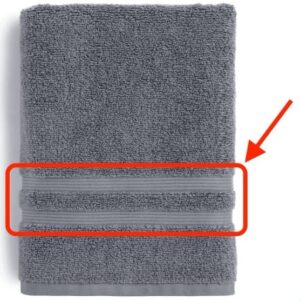
The real purpose of those mysterious lines on towels

A seemingly simple question recently sparked a surprisingly passionate debate across social media: why is there that odd, raised line or strip across bath towels? Thousands chimed in, offering both humorous theories and genuine curiosity — transforming what appeared to be a minor design detail into an unexpectedly viral topic.

This isn’t the kind of conversation that will change the world or answer life’s big philosophical questions. But much like past internet fascinations — think the infamous blue-and-black or white-and-gold dress debacle — the towel line mystery somehow captivated minds. And as it turns out, there’s a lot more to that strange line than meets the eye.

For anyone who’s stood staring at a freshly washed towel wondering, “Do I really need to clean this if I was clean when I used it?” or “Why do these horizontal stripes exist?” — you’re not alone. These questions have been bouncing around for years, but it was a recent post on X (formerly Twitter) that reignited the curiosity.

One user shared a photo of a towel with a single caption: “What’s this line for?” It quickly went viral. Responses flooded in — ranging from cheeky suggestions like “that’s the face-to-butt separation line” to the idea that the towel needed “racing stripes” to dry faster. Others proposed the line acted like a built-in crease for easy folding or was purely an aesthetic decision by towel designers.

But for those looking for a serious, no-nonsense answer, experts quickly stepped in to clear things up. And yes, there is a practical reason behind those mysterious lines.

That line is officially known as the dobby border — and it’s far more functional than decorative. According to textile professionals and sources like Towel Hub, the dobby border is a woven strip at both ends of most towels, created not for show but to improve the overall performance and longevity of the towel.

The dobby border reinforces the structural integrity of the towel, helping to prevent fraying and wear at the edges after repeated washes. This woven section also keeps the towel from becoming too bulky around the borders, ensuring it stays lightweight and remains soft and absorbent. For manufacturers, it provides an area where fancy jacquard weaving or subtle branding can be added — but the core reason is still all about function

Beyond that, it does help with aesthetics. The dobby border provides a visual cue for folding, helps towels hang more neatly, and adds a clean, symmetrical finish that makes towels look more refined, whether they’re stacked in a linen closet or draped over a bathroom rack.

As Towel Hub notes, “Absorbency is one of the most important qualities of a good towel, but achieving the perfect balance between thickness and performance can be challenging. The dobby border helps maintain structure and improve overall function without compromising softness.”

So the next time you reach for your towel, give a little nod to the dobby border. It’s not just there to look pretty — it’s quietly doing the work of keeping your towel strong, shapely, and stylish through hundreds of drying sessions.And hey, who doesn’t love learning the answer to one of life’s oddly satisfying everyday mysteries? Be sure to pass it along — someone else is probably wondering the same thing.

The U.S. House passed the Antisemitism Awareness Act, aiming to codify the IHRA definition of antisemitism into federal civil-rights law. Supporters say it strengthens protections, while critics warn it could chill free speech, especially criticism of Israel.

The GOP-led House of Representatives recently passed legislation intended to formalize a federal interpretation of antisemitism, marking a major step in the ongoing national debate over how the United States defines and responds to anti-Jewish discrimination.The bill, passed with a significant bipartisan majority of 320–91, seeks to codify the International Holocaust Remembrance Alliance’s (IHRA) working definition of antisemitism into Title VI of the Civil Rights Act of 1964—a foundational federal statute that prohibits discrimination in educational programs and other institutions receiving federal funding.This move comes during a period of heightened political tension and widespread national attention on campus protests linked to the Israel–Hamas war, which erupted in October 2023 following the Hamas attack on Israel. Over the past several years, but especially after October 7, demonstrations, encampments, and counter-protests have spread across colleges and universities, often leading to accusations that administrators have failed to protect Jewish students from harassment or intimidation. Supporters of the bill argue that adopting a standardized federal definition of antisemitism will give the Department of Education clearer guidance when evaluating civil-rights complaints and determining whether conduct—especially on college campuses—constitutes discrimination on the basis of shared ancestry or ethnic characteristics. Opponents, however, caution that the bill risks conflating political expression with discriminatory action, setting the stage for potential First Amendment conflicts.

Have $2 bills? Their value might surprise you!

Do you have a $2 bill tucked away somewhere, perhaps forgotten in an old wallet or stashed in a drawer? If so, you might be holding onto a hidden treasure without even realizing it. While $2 bills aren’t as commonly circulated as other denominations, they boast a fascinating history and can carry significant value for collectors.

The backstory of the $2 bill dates back to 1862, amidst the turmoil of the Civil War. It was introduced as a strategic measure to alleviate the demand for coins. Initially featuring the portrait of Alexander Hamilton, the inaugural Secretary of the Treasury, the design of the $2 bill has evolved over the years, showcasing a diverse array of historical figures and iconic landmarks.

The value of the $2 bill has fluctuated over time. In the early 20th century, these bills often traded below their face value due to low demand. However, a surge in interest from collectors during the 1920s and 1930s elevated their worth. By the 1950s, their value had diminished again, with many circulating at face value.

The backstory of the $2 bill dates back to 1862, amidst the turmoil of the Civil War. It was introduced as a strategic measure to alleviate the demand for coins. Initially featuring the portrait of Alexander Hamilton, the inaugural Secretary of the Treasury, the design of the $2 bill has evolved over the years, showcasing a diverse array of historical figures and iconic landmarks.The value of the $2 bill has fluctuated over time. In the early 20th century, these bills often traded below their face value due to low demand. However, a surge in interest from collectors during the 1920s and 1930s elevated their worth. By the 1950s, their value had diminished again, with many circulating at face value.Today, the value of a $2 bill can vary significantly based on factors such as its age, condition, and rarity. Certain bills, particularly those from specific years or bearing unique serial numbers, can fetch hundreds or even thousands of dollars. For example, a series 1953 red seal $2 bill with a star in the serial number could command a price tag of up to $500. Read more below

Magnesium deficiency can have serious effects on the body—muscle cramps, fatigue, sleep problems, and irregular heartbeat may signal your body needs magnesium immediately, highlighting the mineral’s essential role in nerve function, bone strength, heart health, and overall well-being.

Magnesium is an essential mineral involved in over 300 biochemical reactions, yet many people are deficient. Modern diets, processed foods, stress, and environmental factors contribute to widespread low magnesium levels, which can affect muscles, nerves, energy production, bones, and heart function. Early signs are often subtle and easy to overlook.

One of the first symptoms is muscle cramps or twitching. Magnesium helps muscles relax after contraction, so deficiency can cause painful night-time leg cramps, foot spasms, or eyelid twitches. Athletes and older adults are particularly vulnerable.

Chronic fatigue is another common sign. Magnesium is required to produce ATP, the energy molecule, so low levels can leave people feeling deeply tired, even after rest. Persistent exhaustion should raise concerns about magnesium status.

Sleep disturbances can occur because magnesium regulates neurotransmitters like GABA that promote relaxation. Low levels may cause difficulty falling asleep, frequent waking, or light, unrefreshing sleep. Poor sleep further depletes magnesium, creating a cycle that can be hard to break.

Emotional and cognitive issues may appear, including irritability, anxiety, difficulty concentrating, and mild depression. Magnesium helps regulate the nervous system, so deficiency can make stress harder to manage.

Heart and vascular symptoms can also emerge. Magnesium supports electrolyte balance in heart cells, and low levels may trigger palpitations, rapid heartbeat, or increased blood pressure. Headaches, migraines, and blood sugar imbalances are additional warning signs.

Magnesium is critical for digestion, bone health, and nerve function. Deficiency can lead to constipation, osteoporosis, numbness, tingling, and coordination problems. Modern diets, soil depletion, stress, caffeine, alcohol, and certain medications increase deficiency risk.

Replenishing magnesium through foods like leafy greens, nuts, seeds, avocados, legumes, and whole grains helps, but supplements are often necessary. Forms like magnesium glycinate, citrate, malate, and L-threonate address specific needs. Recognizing deficiency early and correcting it can improve energy, sleep, mood, and long-term health.