When Five Minutes Crack the Vault: How “Black Files: Power & Guilt” Ignited a Global Reckoning – bichnhu
Breaking news rarely arrives quietly, but few expected that just five minutes and twenty seconds would be enough to fracture public trust and send shockwaves through global media ecosystems.
Before its official February twentieth premiere, the documentary titled “Black Files: Power & Guilt” reportedly surged past eighty million views, not through promotion, but through fragments of truth slipping into public view.
The catalyst was a short segment directly revealed by Ted Sarandos, CEO of Netflix, transforming what should have been a controlled rollout into an uncontrolled cultural detonation.
Those minutes did not rely on spectacle, dramatization, or emotional manipulation, instead presenting something far more destabilizing: calm structure, careful timelines, and questions left deliberately unanswered.
Viewers did not encounter shouting, accusations, or cinematic outrage, but a slow unveiling of material that felt disturbingly grounded in documentation rather than narrative convenience.
Social media reacted instantly, with clips spreading faster than official statements could follow, turning anticipation into debate and curiosity into suspicion.
Many viewers described a physical reaction, a chill triggered not by what was shown explicitly, but by what the evidence quietly implied.
The documentary opens a door into the long and painful case surrounding Virginia Giuffre, a name repeatedly resurfacing despite years of silence, delays, and institutional distance.
Her testimonies, once fragmented and sidelined, begin assembling into a broader picture that feels less like revelation and more like recognition long postponed.
Rather than presenting conclusions, the film layers moments, dates, and connections, allowing the audience to observe patterns emerging without being told what to think.
Names appear briefly, then vanish again, reinforcing the unsettling sense that absence itself has become a form of protection.
Power networks are suggested through proximity rather than accusation, revealing how influence often operates not through visibility, but through strategic distance.
Gaps in official records become central characters, highlighting unanswered questions that have lingered despite years of inquiry and media attention.
The restraint is intentional, forcing viewers to confront how little noise is required to unsettle carefully maintained narratives.
Without screams or confrontations, the documentary exposes a deeper discomfort: the realization that silence has functioned as an active participant rather than a neutral void.
Commentators immediately divided, with supporters calling the film a necessary reckoning and critics warning against drawing conclusions from incomplete disclosures.
That division fueled virality, as every argument, reaction, and rebuttal pushed the documentary further into public consciousness.
Some praised Netflix for allowing such material to surface, interpreting Sarandos’ involvement as a signal that platforms may no longer fear uncomfortable truths.
By avoiding emotional excess, the documentary allowed the gravity of accumulated details to speak with unusual authority.
That authority proved threatening precisely because it resisted easy dismissal as hysteria or exaggeration.
Some critics claimed the film weaponizes ambiguity, while others insisted ambiguity has always been the weapon of the powerful.
This clash revealed a deeper fault line in public discourse about evidence, belief, and the burden of proof.
Online debates questioned why certain names require extraordinary caution, while others are freely scrutinized with minimal evidence.
The documentary does not answer this imbalance directly, but its structure makes the disparity difficult to ignore.
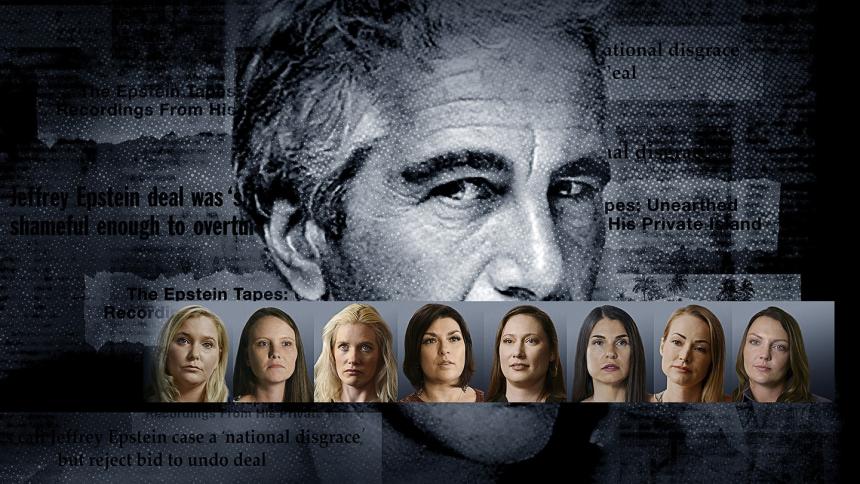
Every omission, every redacted segment, every unexplained gap functions like a spotlight pointed at absence.
Media scholars noted how rare it is for a mainstream platform to trust viewers with incompleteness.
Instead of closure, the film offers continuity, suggesting that truth is often a process rather than an endpoint.
This approach frustrates audiences seeking definitive conclusions, yet energizes those wary of premature certainty.
The early leak itself became part of the narrative, blurring lines between controlled release and accidental revelation.
Questions arose about whether transparency can coexist with corporate strategy in an attention-driven economy.
Netflix’s silence following the surge only intensified speculation, allowing interpretation to flourish unchecked.
Some saw that silence as restraint, others as calculation, and many as confirmation of the documentary’s core themes.
Silence, once again, became content.

The film’s minimalism stood in stark contrast to true-crime conventions built on reenactments and emotional escalation.
By refusing those tools, “Black Files: Power & Guilt” positioned itself closer to an archive than a spectacle.
That archival feeling invited viewers to act less like spectators and more like witnesses.
Witnessing, however, carries responsibility, and not all audiences welcomed that shift.
Many expressed discomfort at being left without moral direction, forced to draw conclusions independently.
Yet supporters argued this discomfort is precisely what meaningful engagement requires.
The documentary’s spread suggests a growing appetite for material that respects intellectual agency over emotional manipulation.
Whether that appetite sustains beyond novelty remains uncertain.