5 Subtle Signs a Woman Has Had Deep Romantic Experience — And Why That’s a Strength, Not a Flaw

Romantic relationships leave footprints on the heart — some soft, some heavy. Over time, they shape how we see love and how we move through life. Every experience, whether joyful or painful, becomes part of the emotional map that guides future choices.

Some women carry their past quietly, hidden behind calm smiles and steady voices. Others reveal pieces of their history through their words, reactions, and the way they guard or give their hearts. These reflections aren’t marks of weakness or shame — they’re signs of growth, resilience, and experience.

The truth is, no one’s journey through love looks the same. Some learn early lessons in heartbreak, others find lasting love later in life. What matters most is not the number of relationships someone has had, but what they’ve learned about themselves and others along the way.A woman who has known real connection often carries strong, thoughtful opinions about love. She’s seen its highs and lows — and understands that love takes effort, communication, and courage. Her insights often come not from books or movies, but from lived experience.

She may also show emotional maturity — the ability to stay calm during conflict, listen without judgment, and express needs clearly. Experience teaches patience and the value of balance between independence and intimacy.

Another sign is self-awareness. A woman who has reflected on her past understands her boundaries, her triggers, and what she truly wants in a partner. She doesn’t play games because she’s done with pretending.

Then there’s compassion — for herself and others. Having loved and lost, she knows that everyone carries invisible scars. That empathy becomes her quiet strength.

Recognizing these signs isn’t about measuring someone’s past; it’s about appreciating the wisdom that comes from loving bravely and learning deeply.


The True Meaning Behind “Barn Stars”

Barn stars aren’t just cute country decor. They were once silent shields against darkness, symbols of pride, and whispered prayers nailed into weathered wood. Behind every five-pointed star and painted circle lies a hidden code of hope, fear, and faith carried across an ocean. Most people drive past them without ever knowing what those colors and patter… Continues…


Long before they became mass-produced wall art, barn stars were the folk language of Pennsylvania Dutch farmers, who fused Old World mysticism with New World survival. A star wasn’t chosen at random: its points, colors, and placement might ask for protection from storms, healthy animals, or a fertile harvest. Some designs echoed hex signs or quilt blocks, weaving geometry, faith, and superstition into a single emblem that watched over the fields day and night.Over time, the fear of evil spirits faded, but the stars remained, transforming from talismans into heirlooms and, eventually, into a style. Today, a metal star on a suburban porch or a painted quilt square on a modern barn still carries a quiet echo of that past. Each one is a small act of remembrance, a way of honoring anonymous farmers who believed that beauty, hope, and hard work belonged side by side on the same red boards.

What Happened When I Picked Up My Dog from a 24/7 Daycare

There is nothing quite like the joy of returning home to a dog who greets you with enthusiasm. For many people, pets are not simply animals, but valued members of the family. Because of this bond, leaving a dog in a 24-hour daycare comes with trust and expectation. Owners assume their companions will be safe, supervised, and treated with care, especially when they are away for long periods.

Daycare facilities often promote features such as constant monitoring, clean play areas, balanced meals, and trained staff who understand canine behavior. These promises offer reassurance to pet parents who need reliable support during travel or busy work schedules. The expectation is not perfection, but responsible care that keeps animals comfortable and secure.Returning after an extended trip can be emotional. The excitement of reuniting with a dog can quickly shift if an unexpected issue is noticed. Even something minor may raise questions about how closely the dog was monitored or whether staff communicated accurately about daily activities. Moments like this can disrupt confidence and prompt reflection on whether promises made by the facility were consistently upheld.Such experiences do not necessarily indicate serious misconduct. They highlight the reality that mistakes and oversights can occur, even in reputable environments. Pet owners can protect their animals by staying informed, asking clear questions, and observing behavior when their pets return home. These actions are not based on mistrust, but on responsibility. A dog cannot explain what happened in their absence, so attentive care from owners remains essential.

HT10. MARRIED IN SECRET! Fans are in shock as a top celebrity duo quietly escapes to Italy for a private wedding under the Tuscan sun

The truth didn’t leak from a publicist. It slipped through whispers.
Somewhere in the Tuscan hills, a Hollywood power couple said “I do” with no red carpet, no press release, no staged Instagram reveal. Just stone walls, olive trees, and a vow to keep the world out. Fans are desperate to know who, where, why—yet the cou… …

Far from studio lots and step-and-repeat backdrops, their ceremony unfolded inside a centuries‑old villa, wrapped in cypress trees and late‑afternoon sun. Guests arrived in staggered cars, phones surrendered, NDAs quietly signed. There were no drone shots, no leaked dress photos, only a garden scented with rosemary and a small circle of people who mattered. Their vows were reportedly handwritten, spoken under strings of warm lights instead of chandeliers, with the hills of Tuscany fading into dusk behind them.What captivates the public isn’t just the romance, but the rebellion. In an industry built on exposure, they chose absence. No live‑streamed kiss, no sponsored hashtag—just a promise protected from commentary and clicks. Their secret wedding has become a symbol of a growing shift: in a world that demands access to everything, the most radical luxury left is a moment that belongs to no one but the two who share it.

Venezuelan opposition leader, 2025 Nobel Peace Prize winner


Maria Corina Machado was never expected to triumph, especially not under these circumstances. Barred from the ballot and targeted by the regime, she has emerged at the center of Venezuela’s most dramatic political rupture.

The moment followed Nicolás Maduro’s capture and U.S. airstrikes that stunned Caracas. As the country reeled, attention shifted to a new image of power and possibility.

Machado appeared beside Edmundo González, their hands raised together. González is already recognized by Washington and many allies as Venezuela’s legitimate president. Machado, once erased from the race, now stands amplified on the world stage.

Together, they face a nation deeply scarred by years of blackouts, mass exile, economic collapse, and fear. Hope has returned, but it is fragile and uncertain.

A transitional government led by the pair would not be a victory lap. It would be an immediate stress test of leadership, restraint, and unity.

They must decide whether reconciliation is possible without revenge, and whether former regime supporters can be reintegrated into civic life without reigniting conflict.

At the same time, they face restless streets, a battered economy, and powerful military figures whose loyalty cannot be taken for granted.

For millions of Venezuelans, this moment holds both promise and peril. If Machado and González succeed, the country may finally begin to heal. If they fail, many fear the consequences could be even darker than what came before.

Young girl who gave birth to triplets next day she di… See more

She survived the pain, the fear, the long nights of pregnancy. She held on for her babies. For a few precious hours, the room was filled with laughter, tears of joy, and whispered promises of a brighter future. Then, without warning, everything shattered. One sunrise. One sudden collapse. One family left with thr… Continues…


They still remember the way her eyes lit up when she first heard three tiny cries echo through the delivery room. Nurses said she kept asking if her babies were really okay, as if afraid the happiness might vanish. Her family filmed those first moments, her weak but radiant smile as she reached out to touch each newborn, already dreaming of birthdays, school days, and a life she never got to see.By morning, the celebration had turned into a nightmare. Complications from the difficult pregnancy struck too fast for doctors to reverse. Now, three infants will grow up on stories instead of memories, learning their mother’s love through photos, videos, and the trembling voices of relatives who adored her. In their tiny faces, the family clings to the only comfort they have left: that her courage lives on in every breath her children take.

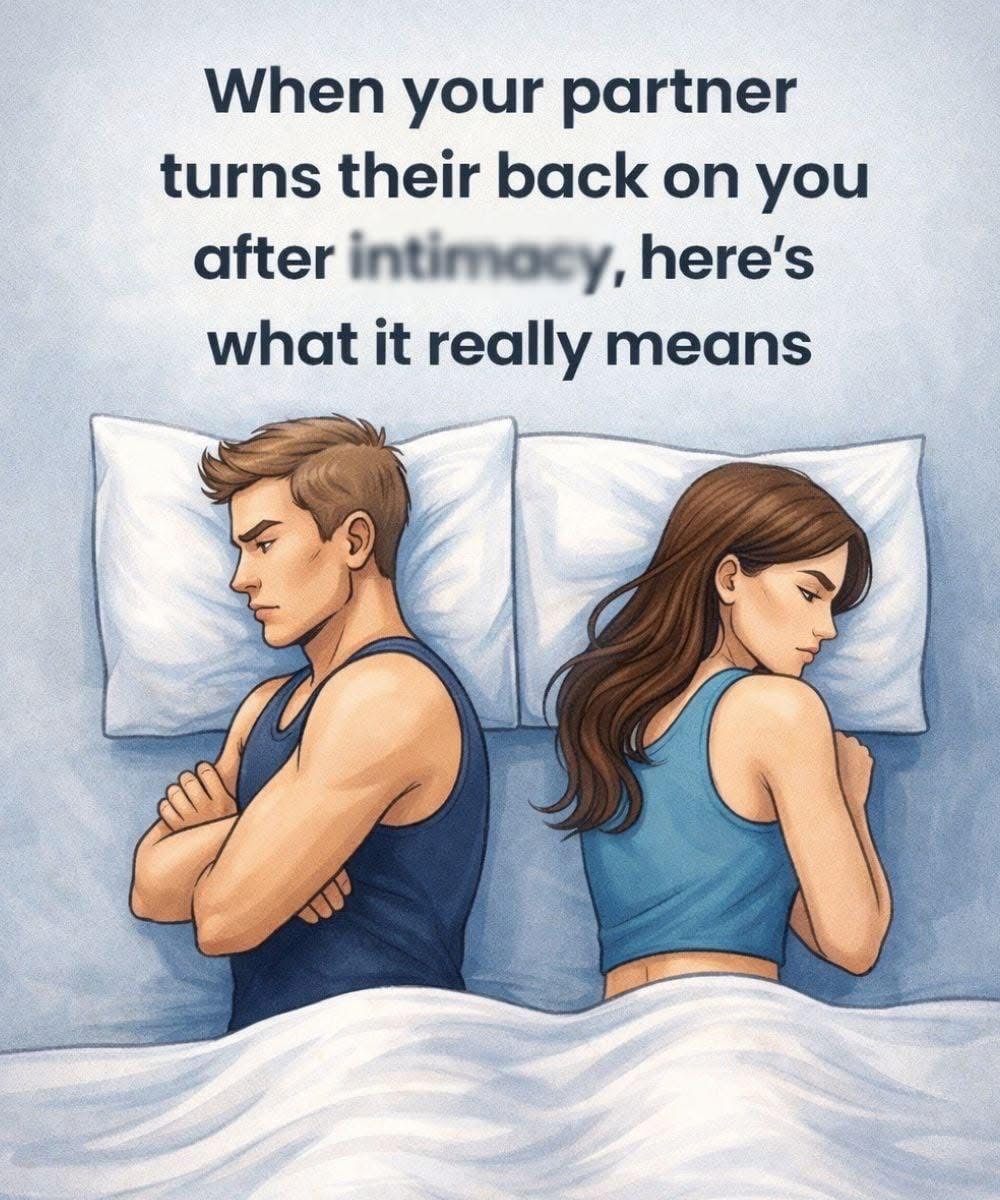
What It Means When Your Partner Turns Away After Making Love

You’ve just shared a tender, passionate, intimate moment… and then, suddenly, he turns his back.

You lie there, caught off guard — maybe a little hurt, maybe confused. Could this simple gesture hide a deeper meaning? Or perhaps… none at all?
Before jumping to conclusions, take a breath. Sometimes, that quiet turn away speaks volumes — or says absolutely nothing.

He Just Needs a Moment to Breathe

For some, intim:acy feels like fireworks — emotional, hormonal, overwhelming. Turning over might simply be a way to come back down, to find balance again.
It’s not rejection; it’s a pause. A quiet space to breathe before returning with calm and presence.

It’s Purely About Comfort

Sometimes, the reason is physical, not emotional. Maybe the blanket’s too warm, the pillow’s off, or his position’s uncomfortable. Not everyone is built for endless cuddles afterward. Turning away might just be the body seeking comfort — no hidden meaning behind it.

He’s Processing His Emotions

Physical closeness can stir deep emotions — memories, vulnerabilities, unexpected feelings.
Turning his back might be his way of silently sorting through that emotional wave. It’s not about creating distance, but about finding clarity in the quiet. A moment to think, to settle — maybe before opening up… or maybe not yet.

He’s Protecting Himself

For some men, emotional exposure feels harder than physical intimacy. Turning away can be a defense mechanism — not running from you, but shielding themselves from feelings that suddenly feel too real.
It’s not about rejecting connection; it’s about managing how much of it they can handle at once.

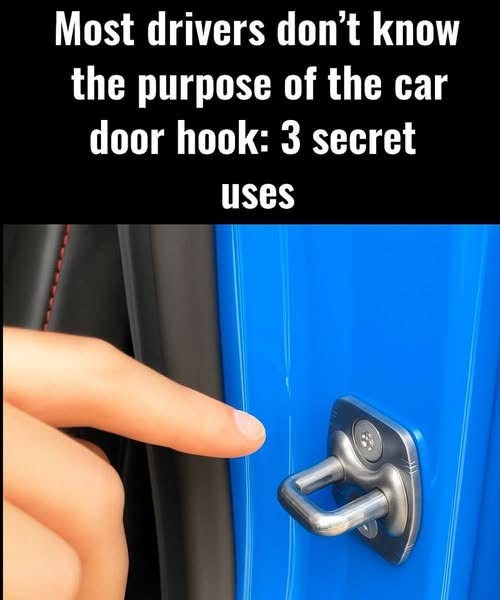
The hook on the car door: 3 unexpected uses

Many drivers have noticed the small metal hook built into the frame of a car door but rarely give it much thought. Most assume it exists solely to help the door latch securely when closed. In reality, this modest-looking component serves several practical purposes beyond simply holding the door in place, and understanding its potential can make everyday vehicle use more convenient and safer.

One lesser-known use of the car door hook is as a support point for accessing the roof of the vehicle. Reaching the top of a car can be awkward, especially for shorter drivers or when handling heavy items. The hook can act as a stable anchor for accessories designed to help with roof access.

There are specialized step or ladder attachments that fit directly onto this hook. Once secured, they create a small but sturdy platform capable of supporting a person’s weight. This makes tasks like loading luggage onto a roof rack, cleaning the roof, or installing roof boxes far easier and safer.

The hook can also function as an anchor point for securing cargo. Ropes, straps, or cargo nets can be attached to help stabilize items during transport. This is particularly useful when carrying oddly shaped or bulky objects that might otherwise shift while driving.

In some vehicles, manufacturers have designed the hook to support safety-related equipment. It may be used as part of child seat anchoring systems or to secure safety restraints, depending on the car’s design and specifications.

What seems like a simple metal piece is actually a versatile feature. By understanding its uses, drivers can take better advantage of built-in vehicle design and make daily tasks easier and more secure.

THIS IMAGE LOOKS INNOCENT… UNTIL YOUR BRAIN NOTICES WHAT’S REALLY GOING ON

The strange thing is how everyone notices something different at first glance. Some people swear they see one thing immediately, while others don’t catch it until they stare longer. That split second is where the mind starts filling gaps on its own.

What makes it even more addictive is how confident the first reaction feels. For a moment, there’s no doubt at all. Then a second detail appears, and suddenly everything shifts. The image hasn’t changed, but your perception has.

Comments explode because no explanation feels complete. One person highlights a shadow, another points to a fold, someone else circles a tiny detail that changes the entire meaning. Each new observation pulls attention deeper.

There’s also that quiet tension between innocence and suggestion. The photo itself may be harmless, yet the brain insists on going somewhere else. That contrast is uncomfortable, exciting, and impossible to ignore.

As you keep scrolling, your eyes get sharper, but your imagination doesn’t calm down. It almost feels trained to look for something more, something hidden just beneath the surface.

And right when you think you’ve figured it out, another angle appears, another detail jumps out, and suddenly you’re not so sure anymore, because the longer you look, the more it feels like the image is saying something else entirely, something you didn’t expect, something that makes you stop, zoom in, lean closer, and start wondering if what you’re seeing is really there or if your mind just decided to go there because it couldn’t help but…

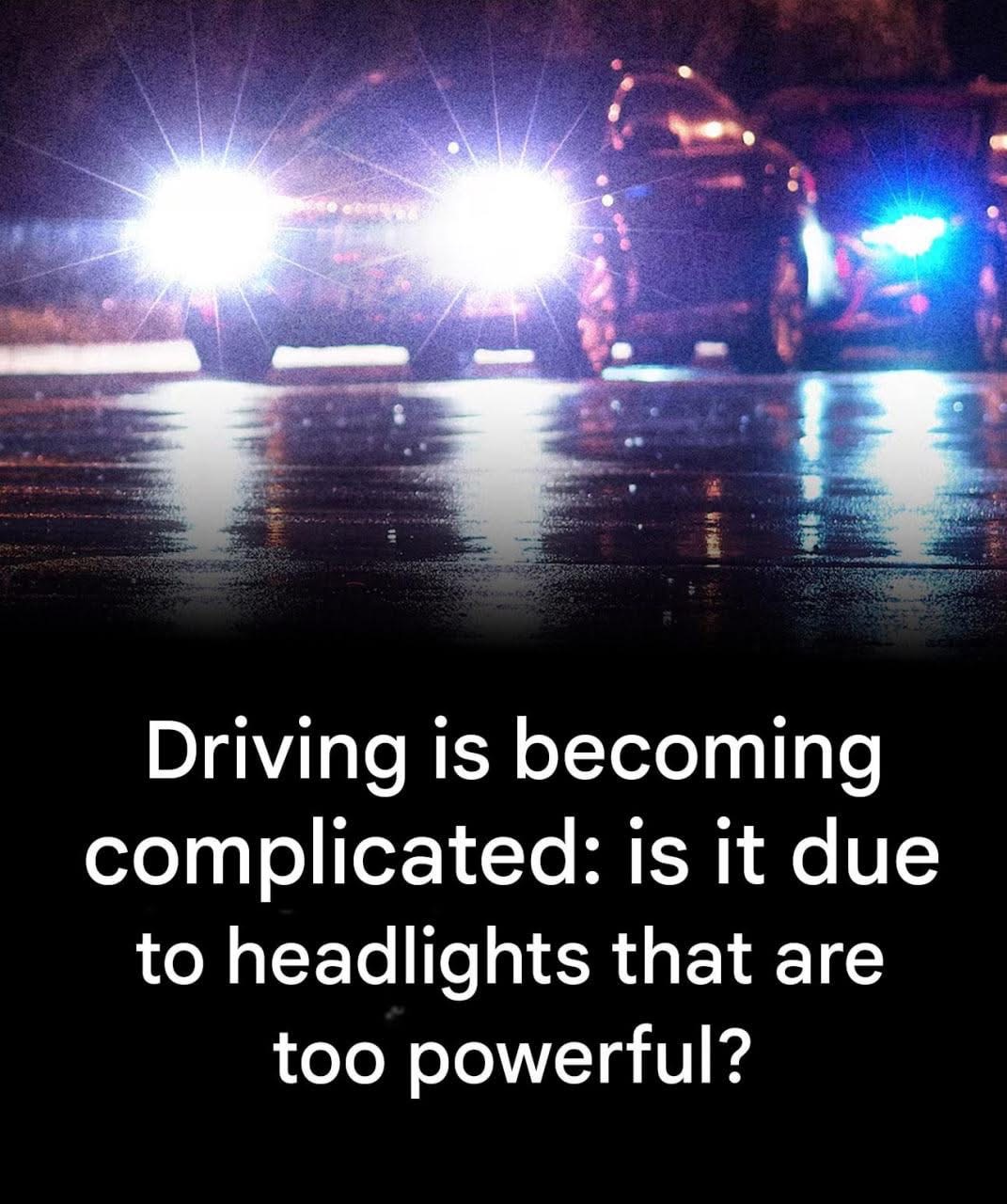
Headlights too bright? Why are more and more drivers struggling to see the road?

You’ve probably noticed it while driving at night: some lights seem brighter these days, almost as if the road has turned into a stage. Why this sudden dazzling effect? ​​Is it your eyes getting tired, your car getting old… or is it just a technological advancement that’s a little too bright? The answer holds a few surprises—and, above all, solutions that are much simpler than you might think.

Why are our eyes more sensitive to modern headlights?


For several years now, many vehicles have been equipped with LED headlights, known for offering clearer visibility. A real advantage for lighting the road… but sometimes a bit of a challenge for our eyes.

Many female drivers report feeling uncomfortable when they encounter these whiter, more directional lights, especially after a long day or when driving in the rain.

The main problem? Concentrated light that can surprise and momentarily saturate the vision.

A single second is enough to lose your bearings, a bit like when you go from a dark room to a brightly lit aisle in a shop.

The result: a feeling of blurriness, hesitation, sometimes even the need to slow down to regain visual comfort.

When the height of the lights changes everything

Another factor that exacerbates this problem is the position of the headlights, especially on larger vehicles. Many people notice that when a large SUV approaches from the opposite direction, the light seems to hit them directly at eye level.

It’s not so much a question of power as of inclination.

The good news is that this parameter is easily checked and corrected. During vehicle inspections, the headlight alignment is systematically examined, as an angle that is too high can obstruct other road users, while an angle that is too low reduces the driver’s visibility.

Even without a visit to an auto center, certain everyday situations—such as rear passengers or a loaded trunk—can alter the beam height. On many cars, a simple manual adjustment restores optimal lighting.

What our eyes can tolerate… and what they prefer

When we are suddenly confronted with bright light, our eyes need a brief moment to adjust. This is a completely natural reflex, but it varies from person to person. Some adapt instantly, while others experience more lasting discomfort.

During this adaptation phase, the road may seem less clear, which is particularly uncomfortable when passing on a narrow or winding road.

Fortunately, a few simple habits can transform the experience: regularly clean the inside and outside of the windshield (the slightest mark amplifies the light), check the condition of your own lights, and look slightly to the right when passing a vehicle to avoid being directly blinded.

Visual comfort while driving  and  night driving safety  are two phrases added in bold for SEO, in accordance with your request.

Towards smarter, more eye-friendly cars

In response to these new driving habits, several countries are rethinking how headlights adjust. Some are already planning to implement widespread automatic systems capable of adjusting the beam height according to the situation.

A simple way to avoid the inconveniences associated with variations in load in the car, but also to harmonize the lighting between different models.

These technologies are gradually becoming more widespread and could become the norm in the coming years, allowing for both more comfortable driving and a more peaceful sharing of the road between all users.