In Scarface, a girl in a blue bikini distracts Mannys character – what happened to her will break your heart

The story of Tammy Lynn Leppert is a haunting narrative of a Hollywood dream that dissolved into a waking nightmare. In the early 1980s, the Florida native seemed destined for the A-list; with her sun-kissed blonde hair and striking hazel eyes, she was the quintessential American beauty. Her trajectory was a relentless series of triumphs, beginning with beauty pageants at the age of four and eventually leading to a staggering 280 wins. By her teens, she was a CoverGirl model and an aspiring actress, landing a memorable, albeit brief, role in the 1983 cult classic Scarface. As the girl in the blue bikini who distracts Manny during the infamous chainsaw scene, she became an indelible part of pop culture. Yet, just as her star began to rise, the light behind her eyes started to flicker and fade.The shift in Tammy’s demeanor was as sudden as it was terrifying. Following an unsupervised weekend party after filming the movie Spring Break, she returned home gripped by an inexplicable, bone-deep paranoia. She became convinced that someone was trying to kill her, a fear so pervasive that it manifested physically during the filming of Scarface. While watching a staged shooting scene, Tammy suffered a complete emotional breakdown, trembling with a terror that surpassed the requirements of acting. Her mother, Linda Curtis, grew increasingly desperate as Tammy’s behavior escalated toward the erratic. On July 1, 1983, following an episode where Tammy smashed windows in their home, she was admitted to a mental health facility for observation. The results were baffling: no drugs were found in her system, and doctors could find no underlying medical cause for her psychological collapse.On July 6, 1983, just days after her release, Tammy embarked on a journey from which she would never return. She left home with a male friend—someone she had previously expressed fear of—to spend the day at Cocoa Beach. After an argument in the car, the friend reportedly dropped her off near the Glass Bank building, just five miles from her house. She was last seen wearing a blue denim skirt and a floral top, carrying a gray purse. Her final words to her mother were a casual promise: “Bye Mommy, I’ll see you in a little bit.” She was eighteen years old.


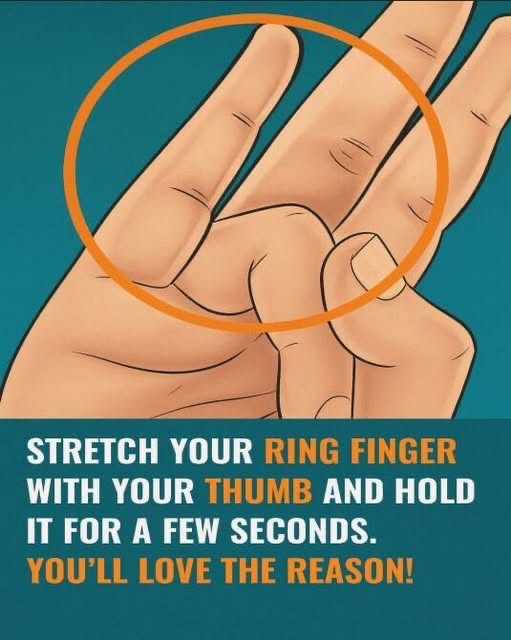
Why Stretching Your Ring Finger Might Feel Surprisingly Good

We rely on our hands far more than we notice—typing, texting, driving, carrying bags, and performing countless small tasks throughout the day. All this activity builds tension in the fingers and palms, even when we don’t feel it immediately. That’s why a simple movement, like gently stretching the ring finger with your thumb, can produce an unexpectedly soothing sensation.

This small stretch works because gentle pressure at the base of the ring finger activates an area that naturally responds well to touch and movement. Techniques like this appear in many wellness traditions, where small motions and pressure points are used to promote relaxation. You might notice your fingers loosen or a mild warmth spreading through your hand as circulation improves.

The relief isn’t purely physical. Pausing to stretch your fingers creates a brief moment of mindfulness in a busy day. It encourages you to slow your pace, breathe a little deeper, and reconnect with your body. Even such a tiny action can offer a sense of calm when your mind feels crowded or your schedule feels nonstop.

This brief pause also interrupts the automatic motion of your hands, drawing attention to how much effort they put in. It’s a reminder that small areas of the body can hold more tension than expected, and a few seconds of care can go a long way.

Though simple, this stretch provides a mental reset that’s easy to incorporate into everyday life. You don’t need equipment or preparation—just a moment to check in with yourself.

It’s not meant as a medical treatment, but rather as a gentle habit that supports comfort and awareness. Even a few seconds of stretching can make your hands feel more relaxed.

Try adding the motion during short breaks, while unwinding at home, or anytime your hands feel cramped. You may be surprised by how much relief such a small gesture provides.

Over time, this tiny practice can become a grounding ritual—one that helps your hands and mind feel just a little lighter.

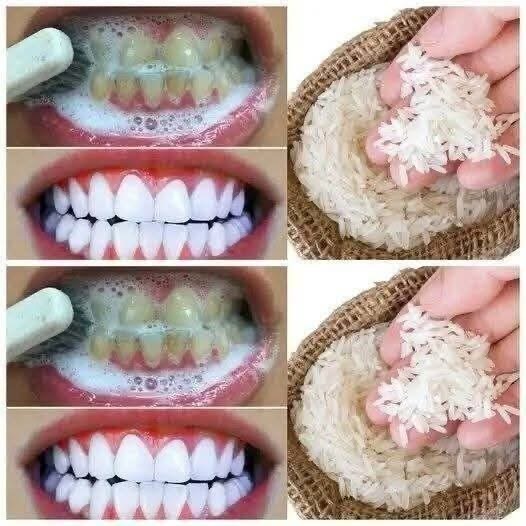
🦷 Teeth Whitening Trick with Rice — A Natural, 1-Minute Smile Brightener (Or Cautionary Tale?)

🌾 Rice Flour Teeth Whitening: What You Need to Know

A viral DIY hack claims you can whiten your teeth in just 60 seconds using simple kitchen ingredients: rice flour, lemon juice, olive oil, and toothpaste. The method involves grinding 1 tsp of raw rice into a fine powder, mixing it with a few drops of lemon juice, a drop of olive oil, and a pea-sized amount of toothpaste, brushing for one minute, then rinsing. The promised result: instant brighter, smoother teeth.

🔬 The Science Behind It
Rice flour acts as a mild abrasive that can help remove surface stains, similar to baking soda. Lemon juice contains citric acid, which may dissolve stains but can also erode enamel over time, increasing sensitivity and yellowing teeth. Olive oil may reduce bacteria slightly, but it won’t protect enamel from acid damage. Toothpaste adds fluoride, which strengthens teeth and helps prevent cavities.

✅ Short-Term vs. Long-Term Effects
You might see a temporary brightness from physical scrubbing or acid-induced dehydration. However, repeated use of lemon juice with abrasives can permanently damage enamel, leading to more serious dental issues. Enamel, once lost, does not regenerate.

🛡️ Safer Natural Alternatives

  1. Oil Pulling: Swish 1 tbsp coconut oil for 10–15 minutes daily to reduce bacteria and gently brighten.
  2. Baking Soda Paste: Use 1 tsp baking soda + water once or twice a week to lift surface stains safely.
  3. Whitening Toothpaste: ADA-approved options with hydrogen or carbamide peroxide are safe for daily use.
  4. Crunchy Vegetables: Apples, carrots, and celery naturally clean teeth and stimulate saliva.
  5. Limit Stains: Rinse after coffee, tea, wine, or smoking.

⚠️ When to Avoid
Skip this DIY if you have sensitive teeth, receding gums, enamel erosion, cavities, or dental work. Lemon juice won’t whiten crowns or fillings and can damage bonding.

❤️ Final Thought
Healthy teeth are more important than extreme whitening. With a soft brush, fluoride toothpaste, and consistent care, you can protect enamel while achieving a bright smile—confidence that lasts a lifetime.

“The Marks of Creating Life”

No one prepares a woman for how her skin will change after she gives birth. They talk about the baby’s beauty, the joy, the smiles — but rarely about the body that carried that miracle. The stretched skin, the marks, the softness that wasn’t there before. Yet every change has meaning.

This skin once stretched to make room for a growing life. It protected, nourished, and held a heartbeat that depended on her every breath. The lines and textures left behind are not flaws — they are reminders of strength, sacrifice, and love in its purest form.

Postpartum skin tells a story that words often cannot. It speaks of sleepless nights, healing, patience, and unconditional care. It shows what it costs to create life and continue giving long after birth. Society often teaches women to hide these changes, to feel ashamed of what motherhood leaves behind. But there is nothing shameful about a body that has done something extraordinary.

A mother’s skin may look different, but it carries more meaning than ever before. It reflects resilience, survival, and a love so deep it reshapes the body itself. These changes deserve respect, understanding, and kindness — not silence or judgment.

This is the raw truth of motherhood. Not filtered. Not perfect. Just real. And real is beautiful.

Let us honor postpartum bodies, speak openly about these changes, and remind every mother that her body is not ruined — it is transformed. Because love leaves marks, and these marks are proof that life once grew here.

This plant is everywhere, but you had no idea it can treat tumors, diabetes, and high blood pressure

You might walk past a white mulberry tree without a second thought, but this unassuming plant offers a surprising range of health benefits. Traditionally used in attempts to develop a domestic silk industry in colonial America, the tree’s durable wood found uses in furniture, boats, and sports equipment. Today, its true value lies in its leaves and berries, which are rich in nutrients and bioactive compounds that support overall wellness.

One of the best-known benefits of white mulberry is its ability to stabilize blood sugar. The leaves contain 1-deoxynojirimycin (DNJ), a compound that slows carbohydrate digestion and reduces post-meal glucose spikes, making it helpful for those managing prediabetes or type 2 diabetes. Beyond blood sugar, white mulberry promotes cardiovascular health: antioxidants and plant compounds can lower LDL cholesterol, improve circulation, and support healthy blood pressure.

Research also highlights potential anti-cancer effects, thanks to resveratrol, a powerful antioxidant that may help inhibit tumor growth. White mulberry further enhances immune function, fights inflammation, and eases oxidative stress, supporting overall resilience. Traditionally, it has been used to relieve cold symptoms, joint pain, and muscle stiffness, while its fiber content supports digestion and nutrient absorption. Additionally, antioxidant compounds may help maintain skin and hair health.

Nutritionally, white mulberry provides vitamin C for immunity, B vitamins for energy, fiber for digestion, and polyphenols and flavonoids with antioxidant properties. Scientific studies support its role in lowering fasting blood sugar, improving insulin sensitivity, and contributing to heart health.

White mulberry is generally safe for most people, though those on diabetes medication or pregnant and breastfeeding individuals should consult a healthcare provider before use. It can be enjoyed as tea, in capsules or extracts, or by consuming fresh or dried berries.

Overall, white mulberry is a versatile natural remedy with a long history and growing scientific backing. From managing blood sugar to supporting immunity, heart health, and more, this humble tree offers benefits that go far beyond its unassuming appearance.

Why You Might See a Purple Flag Flying at the Beach

The warning is easy to miss—until it’s too late. A simple purple flag flaps in the wind, while families laugh and children race toward the surf, unaware of what’s drifting just beneath the surface. It isn’t about waves. It isn’t about currents. It’s about stings, venom, and the silent brush of someth… Continues…


That purple flag is a quiet signal that the ocean has changed. It means jellyfish, stingrays, or other stinging creatures are nearby, turning an ordinary swim into a moment that demands respect and attention. The beach is not closed, but the water is no longer routine; every step and stroke should be a little more deliberate, a little more aware.Lifeguards become your most valuable resource, watching shifting conditions you can’t see from your towel. A quick conversation can tell you where marine life is most active and how to avoid it. Simple choices—shuffling your feet in the shallows, covering your skin with a rash guard, keeping children within arm’s reach, and having basic first aid ready—transform risk into manageable caution. The purple flag isn’t there to scare you away from the ocean. It’s there to help you stay in it, safely, with your eyes open.

TRUMP’S NEW PLAN IS SHO

The proposal, dubbed “Trump Accounts,” would grant every…

born within a specific four-year period a $1,000 government-funded investment account,

tethered directly to stock market performance.

For many families, especially those shut out of traditional wealth-building opportunities, the idea of a nest egg quietly compounding from birth feels nothing short of transformative.

Supporters envision a generation entering adulthood with tangible financial footing, a buffer against the rising costs of education, housing, and economic uncertainty.

To them, this isn’t just policy; it’s a bold attempt to rewrite the script on who gets to build wealth in America.

Yet beneath the hopeful headlines lies a tangle of hard questions.

Tying taxpayer dollars to market volatility raises the specter of future crashes wiping out what was promised as security.

Who manages these accounts, and under what rules? How are costs covered in the long term, and what happens if political winds shift?

Critics warn that without strict safeguards, Trump Accounts could morph from visionary equalizer into a risky bet placed on behalf of the youngest and most vulnerable citizens.

As the debate intensifies, one thing is clear: this proposal has forced the country to confront how far it is willing to go to close the wealth gap—and who will bear the risks of trying.

What is the reason behind women crossing their legs while seated? Psychological viewpoints

The act of crossing one’s legs while seated is more than just a casual physical gesture—it’s a behavior embedded with cultural significance and shaped by centuries of societal norms and expectations. This simple movement, often done unconsciously, transcends individual expression and reflects deeply ingrained ideas about posture, etiquette, and gender roles.

For women, especially, the way they position themselves while sitting has historically been the subject of scrutiny, symbolic interpretation, and even regulation. Across different time periods and societies, this gesture has been molded by social codes that dictate what is considered polite, elegant, or appropriate behavior for women in public and professional settings.

Throughout history, crossing one’s legs has frequently been seen as a sign of refinement, modesty, and self-control. In many Western societies, especially during the 18th and 19th centuries, literature, visual art, and etiquette guides depicted the seated woman as one who crossed her legs or ankles delicately, projecting an image of grace and demureness. This image aligned closely with the era’s ideals of femininity—passive, contained, and aesthetically pleasing.However, these norms are far from universal. In numerous Eastern cultures, for instance, sitting with one’s legs crossed—especially in the presence of elders or authority figures—can be interpreted as disrespectful or overly casual. In such contexts, posture carries powerful cultural meanings that reflect hierarchy, respect, and collective identity.Even as definitions of femininity have evolved significantly over the decades, the practice of women crossing their legs remains widespread. This continued prevalence may be rooted in social conditioning that places importance on appearing composed, elegant, and contained. From a young age, girls in many cultures are taught, both directly and indirectly, how to sit “properly,” reinforcing subtle messages about bodily control and public image.Fashion, media, and artistic representation continue to shape these expectations, reinforcing standards that suggest how a woman “should” appear in social or professional settings. As a result, what may seem like an instinctive gesture often carries a heavy weight of social meaning and internalized norms.

At a psychological level, the act of crossing one’s legs while sitting can be interpreted in various ways. It may signify confidence and self-assurance, suggesting that the individual feels comfortable and in control of their space. Alternatively, it can also be a protective gesture—an unconscious way to create a physical barrier, signaling shyness, discomfort, or vulnerability.

Many women instinctively cross their legs as a way to define and maintain personal space, especially in environments where they may feel overexposed or uneasy. In this context, the posture becomes a tool for self-regulation, offering a small sense of security and autonomy within potentially stressful or public interactions.

This behavior also plays a significant role in nonverbal communication. In both casual and formal settings, body language often speaks louder than words, and the position of one’s legs can reveal subtle clues about their emotional state and openness to social interaction. A closed-off posture—such as crossed legs with arms folded—might signal resistance, nervousness, or a desire to withdraw from engagement.

Experts reveal dirty truth about underwear habits

It might seem like a fundamental hygiene habit, yet many people quietly neglect changing their underwear every day. Health experts now caution that wearing the same pair for too long isn’t just unhygienic—what builds up can pose genuine health risks, making daily changes essential.

As disturbing as it may be, a 2021 study revealed that the average pair of underwear contains about 0.1 grams of fecal matter. With that in mind, wearing underwear for more than a day is not merely uncomfortable or unclean—it may have real health implications, according to medical professionals.

Dirty drawers

Despite well-established hygiene recommendations, a significant number of young adults aren’t changing their underwear daily. A 2023 Newsweek poll found that 36% of Gen Z respondents aged 18 to 24 said they wear the same pair for longer than 24 hours, while another 14% admitted this is a regular habit. In total, half of Gen Z reported going a full day or more without switching to clean underwear.

This practice isn’t confined to the youngest generation. The survey also showed that 24% of millennials, ages 25 to 34, said they routinely wear the same pair of underwear more than once.

In contrast, older adults reported significantly cleaner habits. Among people aged 55 to 64, 67% said they never wear underwear for more than one day, and only 3% admitted to repeating pairs.

Skin irritation or infection

According to doctors, this growing trend of stretching wear-time poses more than a cosmetic concern. Bacteria, yeast, and moisture build up in tight-fitting clothing, creating an ideal environment for skin irritation and potential infections – especially in areas with limited airflow.

“Men and women risk skin irritation, rashes, or the worsening of pre-existing conditions such as eczema or psoriasis when they re-wear underwear too often without washing it; this is due to friction and trapped moisture,” Sarah Roberts, a licensed skincare specialist, told the Daily Mail.

‘Harbor moisture and bacteria’

Roberts wa:rned that wearing underwear too long can cause infections like yeast overgrowth and bacterial vaginosis.

Yeast infections lead to itching, burning, and thick white discharge when candida fungus multiplies. Bacterial vaginosis, often mistaken for yeast, usually includes a fishy odor and gray or yellow discharge caused by bacterial imbalance.

The vulva contains folds and crevices that harbor moisture and bacteria more readily than male genitalia,” Dr. Archit Aggarwal, a dermatologist with ClinicSpots, told the publication.

Jock itch

It’s not only women who face hygiene-related health risks – men are just as vulnerable, especially when it comes to jock itch, a fungal skin infection marked by an itchy, red rash in the groin, buttocks, and upper thighs.

While some people assume looser garments like boxers offer more protection, experts w:arn that skipping daily changes still poses serious risks.

“Men’s boxers, though touching the skin less frequently than women’s underwear, do not escape these hazards – particularly when worn repeatedly without change,” Robert said.

Change at least once a day

Altough some may stretch a pair of briefs for a second day in a pinch, doctors strongly recommend changing underwear at least once every 24 hours to reduce the risk of skin irritation and infection. That advice becomes even more important in high-sweat situations.

“For those engaged in intense physical activities or who sweat heavily, it’s advisable to change underwear more frequently,” said Dr. Hannah Kopelman, a dermatologist at Kopelman Aesthetic in New Jersey. “In hot and humid climates, changing underwear even more than once a day might be necessary to maintain good hygiene.”

Dr. Aggarwal echoed that advice and emphasized the importance of paying attention to early war:ning signs. “If you experience any discomfort, itching, or unusual discharge, change your underwear immediately and consult a healthcare professional, if necessary,” he told the Daily Mail.

How often do you change your underwear? Please let us know your hygiene habits and them share this story so we can hear from others!