A Brief Message From the Pope to the United States Sparks Online Discussion

Just days into his papacy, Pope Leo XIV became the focus of a viral moment that spread rapidly across social media and news outlets. The brief exchange happened during a press conference when a reporter asked if he had a message specifically for the United States.

After a short pause and a warm smile, the Pope answered with a single word: “Many.” He then closed with a familiar blessing, wishing everyone well. The simplicity of the response immediately caught public attention.

Clips of the moment were widely shared online, where viewers offered varied interpretations. Some saw the answer as thoughtful and deliberate, while others felt it was intentionally open-ended, allowing room for reflection.

In a media environment often dominated by long statements and detailed explanations, the restraint of the response stood out. Many commented that its brevity made it more powerful than a prepared speech might have been.

Observers noted that Pope Leo XIV, who was born in Chicago, has long emphasized themes of unity, compassion, and shared responsibility in his public remarks. His approach has typically favored dialogue over confrontation.

On issues such as immigration, economic fairness, and global cooperation, he has often spoken about balance and understanding. For supporters, the one-word answer seemed consistent with that measured communication style.

Rather than delivering a specific message, the Pope appeared to invite people to think more deeply about the challenges facing society. By saying little, he left space for interpretation and personal reflection.

Whether intentional or not, the moment highlighted how even a brief remark from a global religious leader can spark widespread conversation, curiosity, and debate far beyond the room where it was spoken.

What a Simple Happy Meal Revealed About Loss

I was exhausted when I walked into McDonald’s that night, running on little more than habit and hunger. Then I noticed them: a mother in a thin coat and worn clothes, and a little girl trying hard to look hopeful. One small order was placed, followed by a quiet request that ended in a gentle but firm no.

The restaurant felt ordinary in every way. Fryers hissed, people chatted softly, and screens glowed as customers scrolled on their phones. Yet at that small table, something heavier than hunger hung in the air.

The girl sat still, brave but clearly disappointed. Her mother’s posture was tight, as if she were bracing herself against more than just the cold outside. It was a familiar kind of tension, the kind that comes from trying to protect a child from realities you can’t fix.

Then everything shifted. A Happy Meal appeared, quietly placed, no announcement attached. The girl’s eyes widened, disbelief turning into pure delight as she held the toy like it was something precious.

Her laughter broke through the noise of the restaurant—bright, unfiltered, and completely sincere. The mother watched, shoulders slowly relaxing, confusion giving way to relief and a gratitude she never said out loud.

No one else seemed to notice. People kept eating, talking, scrolling. There was no applause, no attention drawn to the moment, and somehow that made it more powerful.

Under those harsh fluorescent lights, a simple truth settled in. Kindness doesn’t need an audience, and dignity doesn’t disappear just because someone is struggling.

I stepped back into the cold night carrying nothing extra in my hands. Still, I felt lighter—reminded that the smallest, quietest gestures can restore a piece of the world, one meal, one toy, one moment at a time.

The Mystery of the Penny in the Car Door Handle: What It Could Mean

Finding a penny tucked inside a car’s door handle is the kind of odd detail that can make anyone pause. We usually expect our vehicles to look exactly as we left them, so spotting a coin wedged into the handle feels intentional enough to spark curiosity. It’s natural to wonder whether it was an accident, a prank, or something more concerning

One theory that often circulates online suggests that pennies or other small objects can be used to interfere with older mechanical door locks. In certain past-model vehicles, a coin could theoretically prevent the door from fully latching, allowing someone to return later and gain access. The idea sounds alarming, which is why it continues to spread.

However, this method has little relevance today. Modern vehicles use electronic locking systems that aren’t affected by a wedged coin. While the story fuels fear, it rarely reflects reality. Still, when people find something unexpected on their car, it’s easy to assume tampering rather than coincidence

Prayers Pouring in for Kai Trump, Family Issues Quiet Statement

the country saw something it rarely witnesses from the Trump orbit: unvarnished, fragile humanity. In that fleeting window, there were no rallies, no cable news segments, no talking points – just a terrified family begging the universe for one more tomorrow. Kai’s brush with death became a reminder that even the most polarizing last name can’t bargain with a ruptured organ or a surgeon’s uncertain expression.As she lay recovering, tubes and tape framing a face too young for such scars, the world glimpsed the Trumps not as symbols, but as parents and children held together by fear and relief. The typo that called her a “son” instead of a daughter felt less like a mistake and more like a digital fingerprint of shock. For once, the noise dimmed, and what remained was something painfully simple: they almost lost her.

Baby born with an DIU peg… See more

doctor was left surprised when she delivered a baby holding something “interesting” in his hand – after sharing the photo, it’s gone viral

The little boy, who was born at Hai Phong International Hospital in northern Vietnam, arrived into the world reportedly clutching his mum’s contraceptive device in a hilarious snap that has since gone viral

While the mum has remained anonymous, the images were shared by obstetrician Tran Viet Phuong, who said she thought it was “interesting” he was clasping the intra-uterine device (IUD) as he came into the world.After delivery, I thought him holding the device was interesting, so I took a picture. I never thought it would receive so much attention,” she said. Read more below

David Letterman’s question that left Jennifer Aniston very uncomfortable

David Letterman was once hailed as the king of late-night television, known for his sharp wit and humor. However, many of his past interviews are now being reexamined, particularly his uncomfortable exchanges with female guests. One such moment that has resurfaced involves Jennifer Aniston’s 2006 appearance on The Late Show, which left viewers uneasy.

Aniston, promoting her film The Break-Up, appeared stylish in a black blouse and shorts. But instead of focusing on her movie, Letterman repeatedly commented on her legs, saying, “That’s a tremendous outfit… because you have tremendous legs.” Aniston, clearly caught off guard, laughed politely and moved on, but the host continued to bring up her appearance.

He later remarked, “I can’t get over your legs,” and even joked that someone should record the show because of “the shot.” The repeated focus on her body made the interview increasingly awkward, with Aniston visibly trying to remain composed.

Letterman then pressed her about her rumored romance with co-star Vince Vaughn, even asking whether he wanted her to appear naked in the film. Aniston hesitated before deflecting, saying he should have asked Vaughn that question.

This wasn’t the first time Letterman had made her uncomfortable. In a 1998 interview, he unexpectedly grabbed her neck and sucked on a strand of her hair, a moment that has since gone viral for its invasiveness.

Clips of these encounters have resurfaced online, sparking outrage and renewed discussion about how women were treated in late-night television.

Despite these moments, Aniston continued to appear on the show, handling each situation with professionalism and grace.

Today, these interviews serve as reminders of how much cultural standards have shifted — and how behavior once dismissed as “humor” is now rightly seen as inappropriate and disrespectful.

If Slugs Keep Visiting Your House, Check This Immediately

Finding slugs inside your home can be unsettling. They move silently, leave slimy trails, and often appear at night when everything is quiet. While slugs are harmless creatures, their presence indoors is never random. If slugs keep visiting your house, it’s important to check a few key things right away — not because of bad luck, but because your home may be sending you a warning.

1. Excess Moisture Is the Main Reason

Slugs are highly attracted to moist, damp environments. If you’re seeing them indoors, your home may have hidden moisture problems.

Check for:

  • Leaking pipes under sinks
  • Damp basements or crawl spaces
  • Condensation around windows
  • Wet floors in bathrooms or laundry rooms

Even small, unnoticed leaks can create the perfect conditions for slugs. Over time, excess moisture can also lead to mold, mildew, and structural damage — problems far more serious than the slugs themselves.

What to do: Fix leaks immediately, use a dehumidifier, and improve ventilation in damp areas.

2. Cracks and Entry Points You May Be Overlooking

Slugs don’t need large openings to get inside. They can squeeze through tiny cracks, gaps under doors, or spaces around window frames.

Inspect:

  • Door thresholds
  • Window seals
  • Foundation cracks
  • Gaps where pipes enter the house

If slugs are entering repeatedly, they’ve likely found a reliable path in.

👉What to do: Seal cracks with caulk, repair weather stripping, and make sure doors close tightly.

3. Outdoor Conditions May Be Pushing Them In

Heavy rain, flooding, or extreme humidity outside often forces slugs to seek shelter indoors. If your yard or garden holds too much water, slugs may migrate toward your house.

Things to check outside:


This house looked like it was about to fall into itself until one family stepped in!

In the realm of architectural preservation, there are stories that defy the logic of spreadsheets and renovation budgets, existing instead in the realm of pure passion. One of the most legendary of these tales is the “heroic rescue” of the Hench House in York, Pennsylvania. Built in 1887 during the height of the Industrial Revolution, this Queen Anne Victorian had survived the turn of two centuries, only to face a death sentence in the early 2000s. Abandoned, crumbling, and condemned by local authorities, the house was considered a “big ruin” so dangerous that most people wouldn’t even step onto its rotting porch. Yet, where others saw a pile of debris, Jim and Jean Leaman saw a masterpiece waiting to be rediscovered.

The Hench House, located at 505 Linden Avenue in the historic “Avenues” neighborhood, was a shell of its former self when the Leamans intervened in October 2006. Decades of neglect had allowed the elements to wreak havoc; a quarter of the roof had been missing for years, allowing rain and snow to pour directly into the structure’s core. The result was a cascading failure of ceilings and walls. Termites had claimed much of the frame, and the attic had become a sanctuary for a family of opossums. The house was hidden behind towering, overgrown maple trees, looking very much like it was about to fall into itself. Most residents expected a wrecking ball, but the Leamans—a retired couple with a deep-seated love for York’s historic charm—decided to buy the ruin and embark on a journey that would consume the next five years of their lives.To understand the scale of their dedication, one must look at the “day in, day out” nature of the work. The Leamans were not wealthy developers; they were hands-on preservationists who performed a significant portion of the labor themselves. Their mission was not just to fix the house, but to restore it to its original 1880s splendor with absolute historical accuracy. This meant stripping away decades of “modern” additions—removing 1930s-era Greek columns that weren’t original and replacing them with period-correct pocket doors salvaged from architectural warehouses. They even went as far as installing magnetic Plexiglas storm windows on the interior so as not to mar the intricate exterior aesthetics.The transformation of the exterior alone is breathtaking. Once a gray, decaying ghost, the house now stands as a beacon of Queen Anne design, painted in a vibrant palette of historically accurate colors. The intricate woodwork, gables, and ornate finishes have been meticulously restored, inspiring neighbors to follow suit and sparking a “snowball effect” of revitalization throughout the Avenues. The Leamans’ work was so transformative that the Hench House was eventually chosen to grace the cover of the definitive guide, Restoring Your Historic House, by Scott T. Hanson, who described the project as one of the most dramatic “before and after” examples in the country.

However, it is the interior of the home—now affectionately known as “The Lady Linden”—that truly leaves visitors breathless. Stepping through the front door feels less like entering a house and more like stepping onto a film set, with a magical, “Harry Potter-esque” atmosphere. The grand staircase and soaring ceilings create a sense of scale that is rarely seen in modern construction. The flooring is a masterclass in Victorian craftsmanship, utilizing five different types of wood to create intricate patterns. Throughout the day, the house is illuminated by a “rainbow of colors” as light pierces through restored stained-glass panels, casting kaleidoscopic patterns across the restored family room.

Each of the five bedrooms on the second floor has been uniquely decorated to tell its own story. The Leamans filled these rooms with period-accurate antiques, including a 19th-century Weaver organ and family heirlooms, creating a warm and inviting atmosphere that bridges the gap between a museum and a home. Perhaps the most charming detail is found at the very top of the house: a small, sun-drenched room in the attic that serves as a perfect office or retreat, offering a quiet view over the neighborhood that the couple fought so hard to save.

Beyond the aesthetics, the Leamans modernized the “bones” of the structure to ensure it would stand for another 130 years. They replaced every inch of plumbing and wiring and installed a comprehensive interior and exterior sprinkler system—a rare and expensive safety feature for a private residence. Their dedication was fueled by a desire to connect their future guests to the history of York. After the restoration was complete, they opened the Lady Linden as a bed and breakfast, using the house as a tool to encourage visitors to explore the city’s downtown and appreciate its architectural heritage.

The story of Jim and Jean Leaman is a powerful reminder that “anything is possible” when vision is backed by determination. They didn’t just save a house; they saved a piece of American history. In April 2019, the Leamans eventually passed the torch to new owners, but their legacy remains etched into every piece of natural wood stripped by hand and every Victorian-style wallpapered ceiling. The Lady Linden stands today not as a ruin, but as a “magical place” and a stunning showpiece that proves even the most neglected structures can be restored to glory with enough love and hard work.


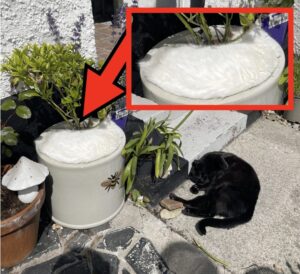
Only the most perceptive will be able to spot the two cats in this photo: can you see them?

Have you ever stared at an image over and over, convinced there’s nothing more to see—only to find out everyone else noticed something immediately? That oddly irritating yet strangely satisfying feeling is back again, thanks to a new visual puzzle making the rounds on social media. At first glance, it looks harmless: a simple photo involving a cat. But don’t be fooled. This challenge quietly puts your attention to detail to the test. And this time, maybe you’ll be the one who notices what others overlooked.

What makes this two-cat challenge so captivating?

Recently, a straightforward photo has been circulating online, instantly grabbing attention. It shows a black cat stretched out comfortably in the sunlight—nothing unusual, nothing suspicious. Yet the caption insists there are two cats in the image. Naturally, curiosity kicks in. Where could the second one be? That’s the magic of these visual riddles. They awaken our playful instincts, pushing us to zoom in, scan every corner, and scrutinize details like explorers searching for a hidden gem. And when you finally think you’ve cracked it, the sense of accomplishment is surprisingly rewarding—almost like getting a complicated recipe right on the first attempt.

The clever illusion that tricks your brain

What makes this puzzle so effective is a simple mental shortcut our brains love to take. We’re wired to focus on what’s most obvious. When a clearly visible cat sits front and center, bathed in light, our attention locks onto it. Everything else fades into the background. It’s similar to how a brightly lit store display draws your eye away from subtler details. The second cat relies entirely on this distraction. Hidden in plain sight, it escapes notice simply because your brain assumes it has already found what it was looking for.

The detail that reveals everything

If you’ve been scanning the image for minutes without success—don’t worry, that’s completely normal—one small hint can change everything. In the background, there’s a cream-colored flowerpot. At first, it seems irrelevant. But to patient observers, its texture and shadows begin to look… different. What initially appears to be a play of light is actually the outline of a perfectly still cat. Once you recognize the shape, the illusion collapses instantly. The second cat was there all along, blending in like a camouflage expert.

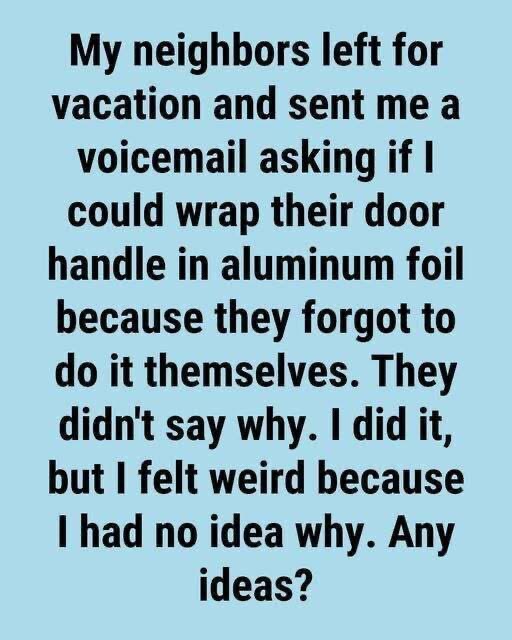
The Trick Using Aluminum Foil on Door Handles

The piece suggests a low-cost way to boost home security by wrapping an exterior door handle with aluminum foil. It presents the method as both a deterrent and a simple alert system you can set up before sleeping or leaving the house. The tone is practical and pitched toward everyday homeowners.

To use the hack, you tightly wrap foil around the outside handle so any attempt to open the door will disturb the foil’s surface. If you later notice wrinkling or displacement, that can be a visible sign someone tried to tamper with the entrance. The foil acts as an inexpensive tamper-evidence marker.

The foil also produces an audible cue: crinkling noise when touched. That sound can give you immediate warning that someone has manipulated the handle, potentially giving you time to respond, check cameras, or call for help. The advice emphasizes quick reaction.

For an added low-tech alert, the writer recommends placing a lightweight object (for example, a cup) on the inside handle so any movement creates noise inside the home. This is suggested as a passive tripwire that complements the foil’s outside tamper-evidence.

The piece stresses that this hack should be used alongside standard security measures—good locks, proper lighting, and cameras—not as a replacement. It frames the foil trick as an inexpensive, supplemental layer that increases situational awareness without major investment.

In short, the aluminum-foil handle method is presented as an easy, affordable way to detect tampering and deter casual intruders. It’s pitched for people who want quick, low-cost improvements to home safety and situational awareness, while still relying on primary security systems for actual protection.