
That unassuming loop began as a clever survival detail in the tight, storage-starved world of early 1900s Navy ships. Sailors needed a way to keep their uniforms neat without closets, so the “locker loop” was born—a simple fabric tab that let them hang shirts on hooks instead of tossing them on the floor. Later, it quietly slipped from military necessity into Ivy League culture, morphing into a subtle badge of style on crisp Oxford shirts and preppy wardrobes.Over time, the loop picked up new meanings and myths. Some students supposedly cut theirs off to signal they were in a relationship, while girlfriends wore their pins in return. Today, it’s part travel hack, part design flourish—perfect for hanging a shirt in a hotel bathroom or spotting a brand’s signature touch. Next time your fingers brush that small strip of fabric, you’ll know you’re holding a thread that runs from ship decks to dorm rooms to your own closet.
Meaning Behind the Tradition of Coins

Coins of Remembrance
Placing coins on military gravestones is a quiet yet meaningful tradition, symbolizing honor, remembrance, and connection.
While it may seem like spare change, each coin carries a specific message.
Though rooted in ancient customs, the modern American form grew during the Vietnam War.
Soldiers used coins to discreetly express grief and respect without political debate, leaving behind a personal sign of remembrance.
The Meaning Behind Each Coin
A penny means someone visited; a nickel signals they trained with the deceased;
a dime shows they served together; and a quarter indicates the visitor was present when the soldier died.
Silent Solidarity
For families, finding these coins affirms that their loved ones are still remembered.
This simple act transforms small tokens into messages of shared history, sacrifice, and enduring honor.
Donald Trump promises Christmas cash gift

Donald Trump’s nationally televised address fused patriotic theater with hard-edged politics.
Framed as a tribute to 1776, the $1,776 “Warrior Dividend” was cast as both a Christmas gift and moral repayment to 1.45 million service members.
Trump credited “trillions” in tariff revenue and insisted “nobody deserves it more than our military,”
while offering few specifics on long-term funding or economic impact.
Behind the scenes, officials described the payout as a one-time basic housing supplement, using billions Congress had already set aside to ease the cost-of-living crisis squeezing military families.
For many troops, the timing is immediate and personal: rent due, groceries rising, kids’ gifts not yet bought. Yet the speech was not just about relief;
it was a campaign-style indictment of Biden-era inflation and policy failures. Between the gratitude and the grievance,
Trump left the country arguing over whether this was pure generosity, sharp politics, or both.
How a Southern Dessert Became Forever Linked to Jimmy Carter

Southern cuisine has long represented more than nourishment; it embodies comfort, shared history, and traditions passed carefully from one generation to the next. Among its many understated classics is the Jimmy Carter Dessert, a humble no-bake sweet that reflects Southern values of simplicity, hospitality, and connection. Often associated with peanut farming and the legacy of Jimmy Carter, the dessert feels deeply rooted in regional culture.
This treat is especially beloved for its accessibility. It requires no baking, no advanced skills, and no elaborate equipment, making it ideal for busy households, church potlucks, and family gatherings. Its appeal lies in familiar ingredients and a straightforward process that welcomes cooks of every experience level.
The base layer is typically made from crushed graham crackers blended with creamy peanut butter, then pressed firmly into a dish. This foundation provides a gentle crunch and a nutty flavor that sets the tone for the dessert without overwhelming the palate. It is sturdy yet comforting, much like the traditions it represents.
Above the base sits a smooth middle layer of cream cheese, powdered sugar, and vanilla. Light, creamy, and slightly tangy, it balances the richness of the peanut butter while adding a soft contrast in texture. This layer gives the dessert its signature melt-in-the-mouth quality.
A thin layer of peanut butter is often spread across the top, reinforcing the dessert’s defining flavor. After chilling for several hours, the layers set together into clean, sliceable squares. Optional toppings like crushed peanuts or a drizzle of chocolate add texture and visual appeal.
More than a dessert, this recipe captures the heart of Southern cooking. It reminds us that beloved dishes are not always complex, but meaningful—shaped by memory, place, and the joy of sharing food around a table.
We’re now learning who else was on that plane —and the details are heartbreaking…See more

The identities of three others who died in Thursday’s plane crash that killed retired NASCAR driver Greg Biffle and his family have been disclosed in a joint statement released by the victims’ families, as they speak out for the first time.
“We are devastated by the loss of our loved ones. This tragedy has left all of our families heartbroken beyond words,” the statement from the Biffle, Grossu, Dutton and Lunders families, shared by Fox Sports motorsports reporter Bob Pockrass on X, reads.
“Greg and Cristina were devoted parents and active philanthropists whose lives were centered around their young son Ryder and Greg’s daughter Emma (mother – Nicole Lunders). Emma was a wonderful human being with a kind soul who was loved by many people. Ryder was an active, curious and infinitely joyful child.”
In addition, the family members shared the identities of the three other victims.
“Dennis Dutton and his son Jack were deeply loved as well, and their loss is felt by all who knew them. Craig Wadsworth was beloved by many in the NASCAR community and will be missed by those who knew him.”
Wadsworth was a well-known figure along the NASCAR circuit who once drove retired NASCAR driver Kenny Wallace’s motorhome, he shared in a post on Instagram.
The statement continued, “Each of them meant everything to us, and their absence leaves an immeasurable void in our lives. At this moment, our focus is on honoring their lives and supporting one another.”
Biffle, his wife Cristina Grossu Biffle and their five-year-old son Ryder were aboard the plane, as was Biffle’s 14-year-old daughter Emma, whom he shared with ex-wife Nicole Lunders.
The Cessna C550 crashed and exploded into a fireball while landing in inclement weather at Statesville Regional Airport in Statesville at around 10:15 a.m., according to the Associated Press.
The business jet had taken off from the airport — which is about 45 miles north of Charlotte — shortly after 10 a.m. before attempting to return to the airport.
According to family friend Garrett Mitchell, the plane was en route to Florida at the time of the accident.
“Unfortunately, I can confirm Greg Biffle, his wife Cristina, daughter Emma, and son Ryder were on that plane,” Mitchell posted on Facebook.
The Best-Kept Secret to Creamy, Gourmet Mashed Potatoes (It’s NOT milk!)
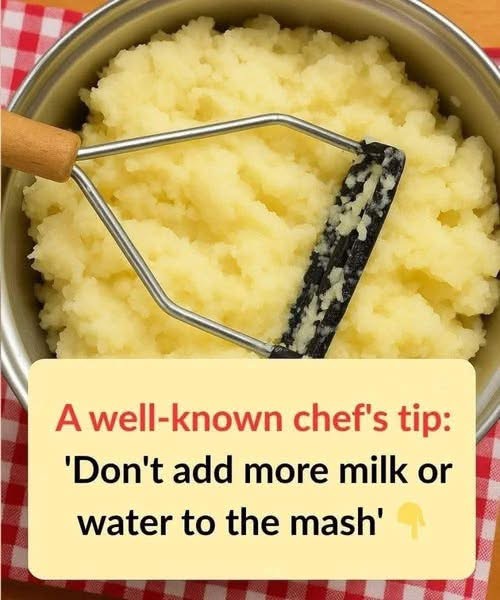
Tired of boring mashed potatoes?  Give them a creamy upgrade with one simple switch—use hot cream instead of milk!


This easy trick transforms your mash into a rich, ultra-creamy side dish that tastes like it came from a fancy restaurant. 
Quick Recipe (Serves 4):
- 1 kg potatoes (Yukon Gold or Russet)
- 175g unsalted butter
- 100ml hot cream (whipping cream works well)
- Salt to taste
Steps:
- Boil potatoes until tender.
- Drain and return them to the pot to dry.
- Mash by hand—avoid blenders for best texture.
- Stir in butter, followed by hot cream.
- Season with salt, pepper, or herbs.
Why It Works:
 Creamier, smoother texture
Rich, restaurant-quality flavor
Budget-friendly and kid-approved
Want more flair? Mix in garlic, shredded cheese, or fresh chives for a flavor boost.
Perfect for everyday dinners, holiday meals, or when you just need comfort food that hits the spot. 

The Cost Of A Father’s Love

When my daughter Vanessa asked me to pay for her wedding, I refused, reminding her that I had already helped her buy a house. Her sharp reply—that I would die before spending all my money—cut deeper than I expected. That night, her fiancé Marcus called, shaken and worried, revealing that Vanessa was facing serious financial trouble.
Marcus explained he had discovered a foreclosure notice and learned the mortgage had not been paid for months. Despite the large sum I had given Vanessa for the down payment, the account was empty. The money had been spent on travel, designer clothes, and wedding expenses. What I believed was support had quietly turned into entitlement.
We met in secret, reviewing bank statements that confirmed the truth. Vanessa had put down a minimal amount on the house and pocketed the rest. Marcus admitted he could no longer go through with the wedding. Together, we decided to confront her honestly.
At the house, surrounded by wedding plans, Vanessa denied everything before angrily insisting the money was hers to enjoy. She demanded I fix the situation with another check. Instead, I told her no, choosing for the first time not to rescue her from her own choices.
Marcus called off the wedding, and Vanessa stormed out, furious. The months that followed were quiet and painful. She lost the house, moved out, and cut off contact. Though the silence hurt, it also felt necessary.
Nearly a year later, Vanessa returned, changed and humbled. She had a job, no demands, and genuine regret. We slowly rebuilt our relationship. Years later, she married again—simply and honestly. As I walked her down the aisle, I knew the greatest gift I gave her wasn’t money, but the strength to grow.
Interesting

Cranberry juice has become popular for both its taste and its reputed health benefits. These include helping prevent urinary tract infections (UTIs), supporting heart health, and providing antioxidants. With these benefits in mind, the author decided to take on a 7-day cranberry juice challenge to see if it would improve their well-being.
At the start, the author was in generally good health but experienced occasional digestive discomfort. They hoped cranberry juice might improve digestion, energy levels, and skin clarity. To keep the experiment consistent, they drank one glass of unsweetened, pure cranberry juice each morning.
Early in the week, they noticed mild boosts in energy and smoother digestion, though the tart taste took some getting used to. Staying hydrated helped manage the acidity, but the flavor remained intense.
By the end of the week, the author felt refreshed and noted improvements in digestion and slightly clearer skin. However, they also experienced some acidity and mild heartburn, which served as a reminder to use cranberry juice in moderation.
Although cranberry juice isn’t a miracle solution, the experience showed that it can offer health benefits when used thoughtfully. Scientific studies support its role in UTI prevention, especially when the juice is pure. The author plans to keep cranberry juice in their routine, possibly every other day or blended with other juices, to balance the pros and cons.
Keeping Ashes at Home: What You Should Know Before Deciding

The loss of a loved one leaves an emotional space that words often can’t fill. For many, keeping a loved one’s ashes at home offers a way to stay connected and comforted. As cremation becomes increasingly common in the U.S., more families are asking whether this practice is appropriate or respectful — and the answer depends on personal beliefs, spiritual values, and emotional needs.
Keeping ashes at home can provide peace and connection. A simple urn placed beside a photo or candle can be a quiet reminder of love, especially for seniors who have lost longtime partners. However, different faith traditions offer varied perspectives. Spiritist teachings, for instance, suggest that holding on to ashes too tightly might affect the spirit’s ability to move forward, recommending instead that ashes be returned to nature or placed in a sacred resting space.
Christianity also holds the body in high regard. While modern Christian denominations, including the Catholic Church, accept cremation, they generally advise that ashes be kept in consecrated locations. Protestant views may vary, but the focus remains on respect, remembrance, and honoring both the body and the soul.
Understanding Your Sleep Style and What It Means for Your Goals!

Most people see sleep as a simple pause before the next day, but sleep patterns often reflect how someone carries stress, ambition, and emotional weight. While not scientifically deterministic, recurring sleep habits can offer insight into burnout risk, resilience, and overall well-being.
As conversations around mental health and performance grow, sleep has become a key focus. High achievers, caregivers, and goal-driven individuals often discover their sleep reveals internal pressure more clearly than productivity metrics ever could.
Certain sleep positions are common among people under constant pressure. These individuals are dependable, disciplined, and often exhausted from exceeding their limits. Falling asleep quickly may signal nervous-system fatigue rather than healthy rest, making recovery essential for sustainable success.
Experts warn that ambition without recovery leads to diminished focus, weakened immunity, and emotional depletion. For these high performers, rest is not indulgence but strategy. Productivity improves when recovery is treated as part of success.
Other sleep positions are frequently seen in caregivers and highly empathetic individuals. These people carry both practical and emotional responsibility, often placing others’ needs ahead of their own. Over time, this pattern increases vulnerability to anxiety and compassion fatigue.
Mental health professionals note that such individuals struggle not with commitment, but permission. Learning that self-care is not selfish is often a turning point in preserving long-term emotional health.
Some sleep patterns align with fiercely independent personalities. These individuals value self-reliance and often process stress privately. While independence is praised, chronic emotional containment can lead to isolation and delayed recovery.
Across all sleep styles, a shared theme emerges: people give more than they receive. Sleep is not passive—it restores cognition, stabilizes mood, and protects health. Listening to these signals helps align ambition with recovery, creating clarity, balance, and lasting resilience.