When Mercury Nashville signed a young singer named Eilleen Twain in the early 1990s, label executives asked her to change her name, and she drew one line she refused to cross. Born Eilleen Regina Edwards in Ontario, Canada, she was two years old when her mother remarried Jerry Twain, an Ojibwe man who legally adopted Eilleen and her sisters. In the cold northern town of Timmins, money and firewood often ran short. By age eight, she was singing in local bars after midnight to help pay the family bills, and she spent summers working alongside Jerry on reforestation crews in the bush. That life broke open on November 1, 1987, when her mother and Jerry died in a car accident. At 22, Eilleen put Nashville on hold and took a stage job at the Deerhurst Resort in Huntsville, Ontario, raising her three younger siblings until they could stand on their own. When she finally reached Music City, producer Norro Wilson and label head Dick Frank worried radio DJs would stumble over Eilleen Twain. They wanted a brand-new full name. She refused to drop Twain. Giving up that last name felt like erasing the adoptive father who had raised her. Instead, she paired his surname with Shania, an Ojibwe name passed down to her as meaning “I’m on my way,” and released her self-titled debut in April 1993. Every album she ever sold carried Jerry Twain’s name into the world. Still, that 1993 debut barely made a dent in Nashville, and how she fought for creative control before recording 1995’s The Woman in Me is the next chapter of how she truly found her way.
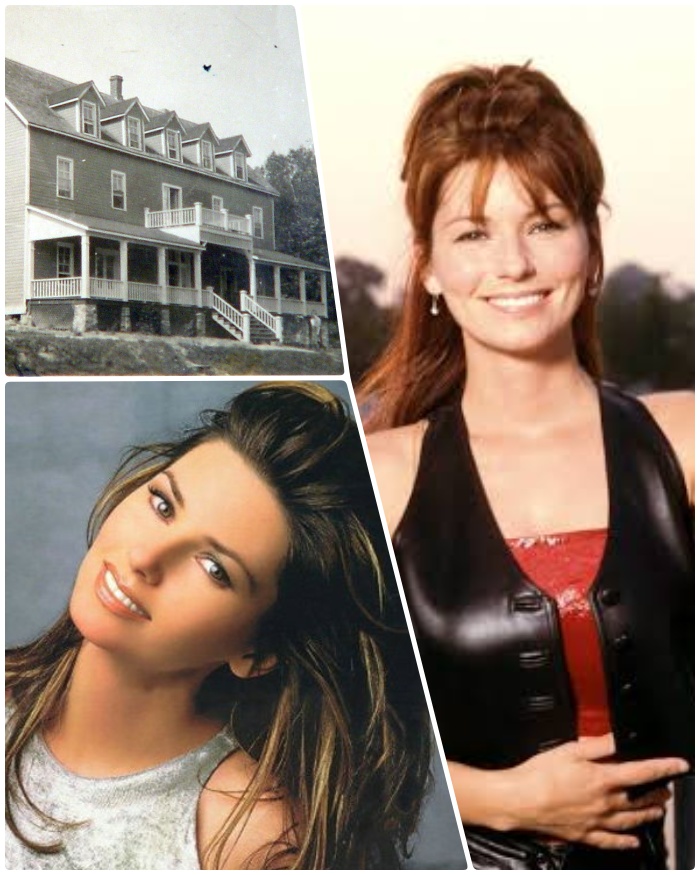
WHEN MERCURY NASHVILLE ASKED A NEW SINGER NAMED EILLEEN TWAIN TO CHANGE HER NAME, SHE DREW ONE LINE FOR THE FATHER WHO RAISED HER
When a young Canadian singer named Eilleen Twain walked into the offices of Mercury Nashville in the early 1990s, she had already survived enough to know what she was willing to trade for a record deal and what she would never put on the table.
Before the global tours and diamond plaques, she was born Eilleen Regina Edwards on August 28, 1965, in Windsor, Ontario. She was just two years old when her mother, Sharon, married Jerry Twain, an Ojibwe man from the Mattagami First Nation who legally adopted Eilleen and her sisters and gave them his last name.
They grew up in Timmins, a rugged gold-mining town in northern Ontario where winters were long and the household budget often ran out before the month did. Heat and groceries were never guaranteed.
By the time Eilleen was eight, her mother was waking her up late at night to sing in local bars and clubs after midnight, when liquor laws allowed a child on stage to earn a few dollars toward the family bills. During the warmer months, she worked beside Jerry on reforestation crews deep in the northern Canadian bush, swinging a brush axe and planting trees in rough terrain for hours a day.
She pursued music through her late teens and early twenties, singing in Toronto cover bands and cutting early demos. Then on November 1, 1987, her mother and Jerry died in a car accident in northern Ontario when their vehicle collided with a logging truck.
At 22, Eilleen set aside her own plans for Nashville. She moved her three younger siblings—Mark, Darryl, and Carrie-Ann—to Huntsville, Ontario, where she took a steady job performing in the stage revue at the Deerhurst Resort.
For the next three years, she sang show tunes and pop standards to keep a roof over their heads, paid the bills, and made sure her youngest brothers graduated from high school before she took another step toward her own career.
Only after her siblings could stand on their own did she put together a demo tape with Huntsville resort musical director Mary Bailey and send it south. That recording eventually reached producer Norro Wilson and Mercury Nashville head Dick Frank, who heard enough promise to sign her and bring her to Music City.
Once the paperwork was done, however, label executives raised an immediate concern about her billing. They worried country radio disc jockeys would stumble over the pronunciation of Eilleen, and they pushed her to adopt a completely new first and last name for the American market.